The protein guide for adults 60+
Learn how much protein adults over 60 really need, the best high-protein foods to eat, and simple ways to hit 80 to 100 grams a day without overhauling your diet.
Written by
Key takeaways
- After 60, your body needs more protein than it used to, but most seniors aren't getting enough. The recommended target is 80–100 grams per day.
- You don't have to cook elaborate meals to get enough protein. Grab-and-go options, smart restaurant ordering, and a well-stocked pantry can get you there.
- Protein and heart health aren't at odds. It's about context and balance, not cutting out entire food groups.
- Your specific needs depend on your weight, medications, and health goals. A Bold Care nutrition appointment can help you build a personalized plan to support nutrition and weight management.
Why protein matters more after 60
Here's something that surprises most people: the amount of protein that kept you strong at 45 may not be enough as you age.
After about age 60, your muscles become less efficient at using the protein you eat. Researchers call this "anabolic resistance." Your body still needs protein to maintain and repair muscle tissue, but it takes more of it to get the same job done.The Recommended Dietary Allowance (RDA) of 0.8 grams of protein per kilogram of body weight was set to prevent deficiency, not to keep you strong and functional as you age. Experts in aging and nutrition now recommend 1.0 to 1.2 grams per kilogram per day for older adults. In practical terms, that's roughly 80 to 100 grams per day for most people.
Most adults 60 and over aren’t getting the recommended amount of protein. That matters. Over months and years, it could translate to gradual muscle loss, reduced strength, slower recovery, and a higher risk of falls and fractures.
This becomes even more important in certain situations. If you're on a GLP-1 medication like Ozempic or Mounjaro, the reduction in appetite that comes along with these drugs means you're eating less overall. If you're not intentional about where your protein comes from, you can lose muscle along with fat, which undermines the benefits of the medication. If you're managing diabetes, muscle tissue plays a direct role in how your body regulates blood sugar. Less muscle means less efficiency at clearing sugar from your blood. And if you're recovering from illness or surgery, your body's protein demands increase significantly right when your appetite is often at its lowest.
But protein alone isn't the full story. It has to be combined with adequate nutrition overall, along with resistance and strength training. The protein and the exercise work together. One without the other isn't going to get you where you want to be. (Learn more about how exercise supports bone health and muscle strength.) Also important: hydration. Adequate hydration is a key part of ensuring your body can process your extra protein intake.
This guide complements our comprehensive Weight Loss for Seniors: The Complete Guide, which covers nutrition, exercise, cost, and more.
How much protein do YOU need?
Take your body weight in pounds and divide by 2.2 to get your weight in kilograms. Then multiply by 1.0 to 1.2 (use the higher end of the range if you have higher protein needs). That's your daily protein target in grams.
Your protein formula: (Your body weight ÷ 2.2) x 1.2
Example: If you weigh 160 lbs, divide by 2.2 to get about 73 kg. Multiply by 1.0 to 1.2, and your target is roughly 73–88 grams per day.
(160 ÷ 2.2) x 1 = 73 grams
(160 ÷ 2.2) x 1.2 = 87 grams
The protein cheat sheet
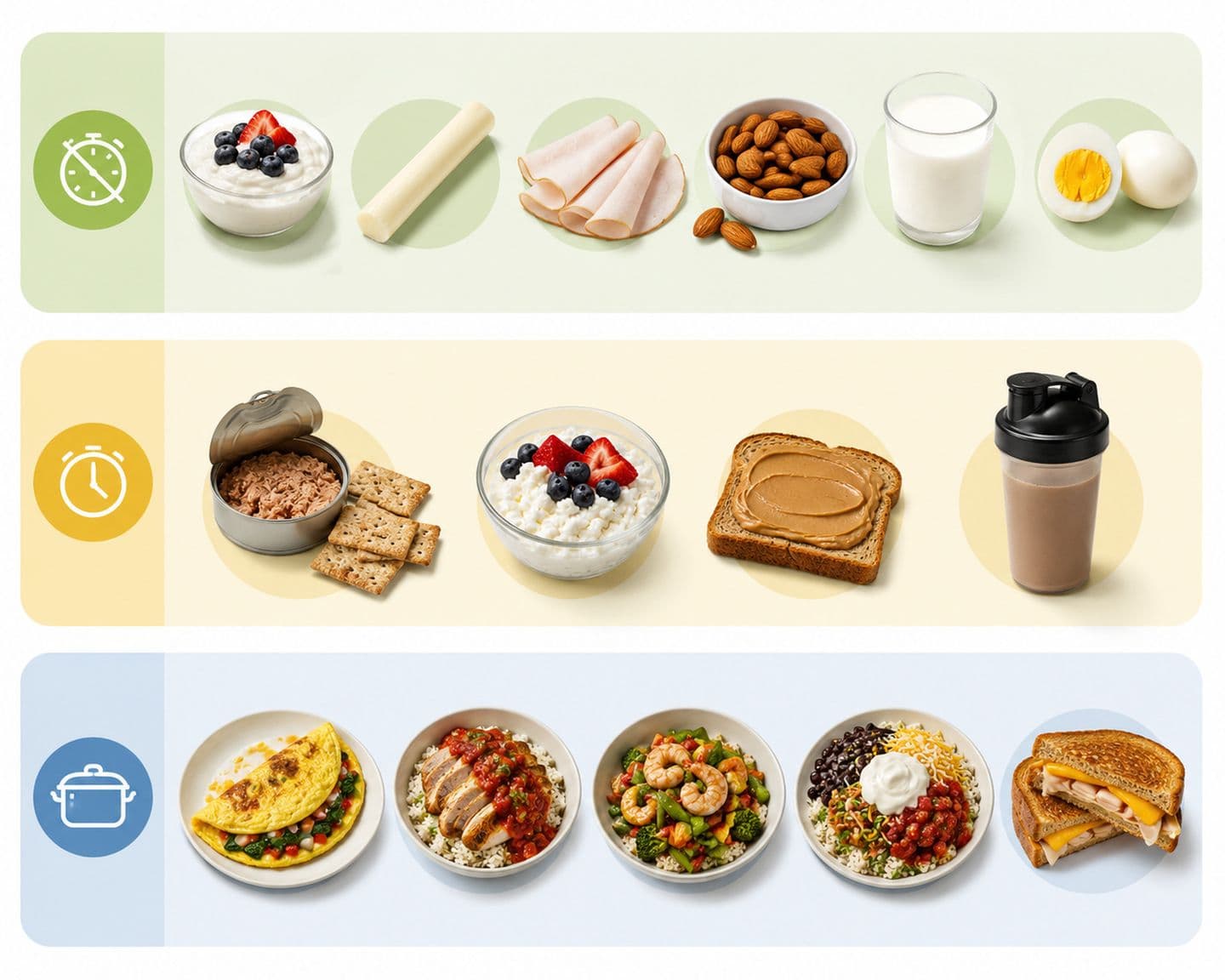
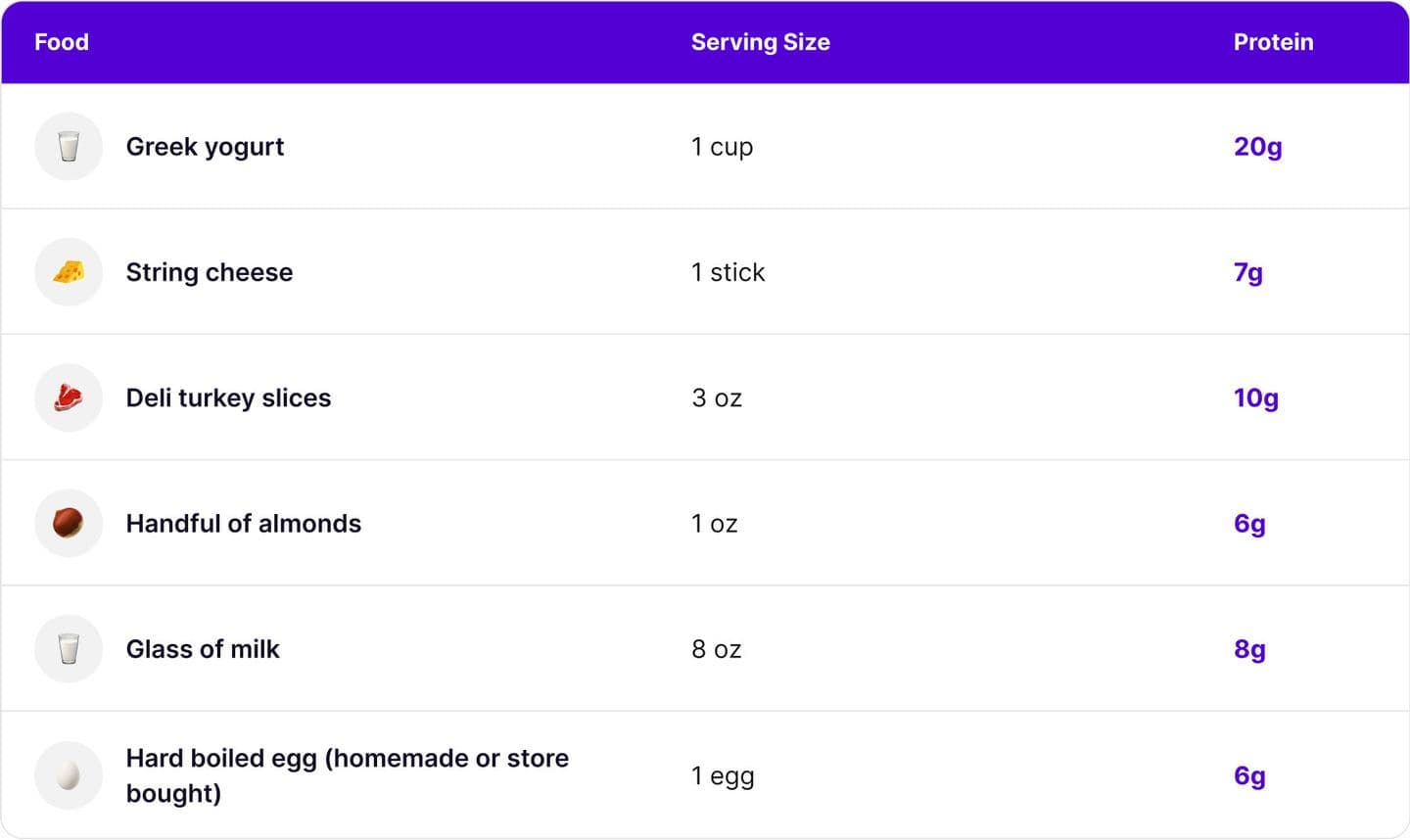
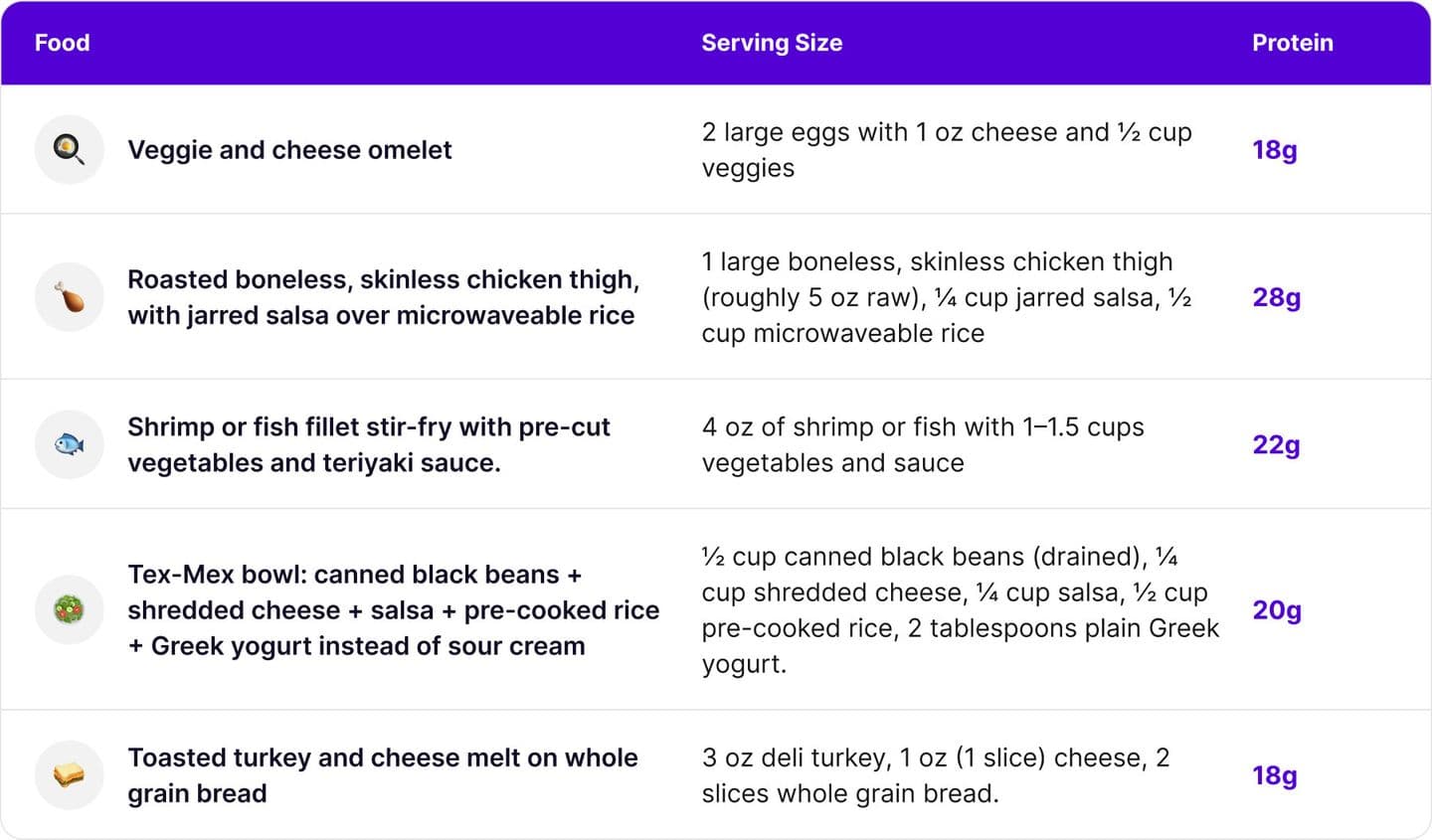
The biggest barrier to eating enough protein isn't knowledge. It's convenience. You probably know that chicken, fish, and lean meats have protein. To help you actually incorporate these suggestions into your daily routine, we’ve created a cheat sheet for different daily protein options, organized by effort.
Zero prep
Minimal prep (under 5 minutes)
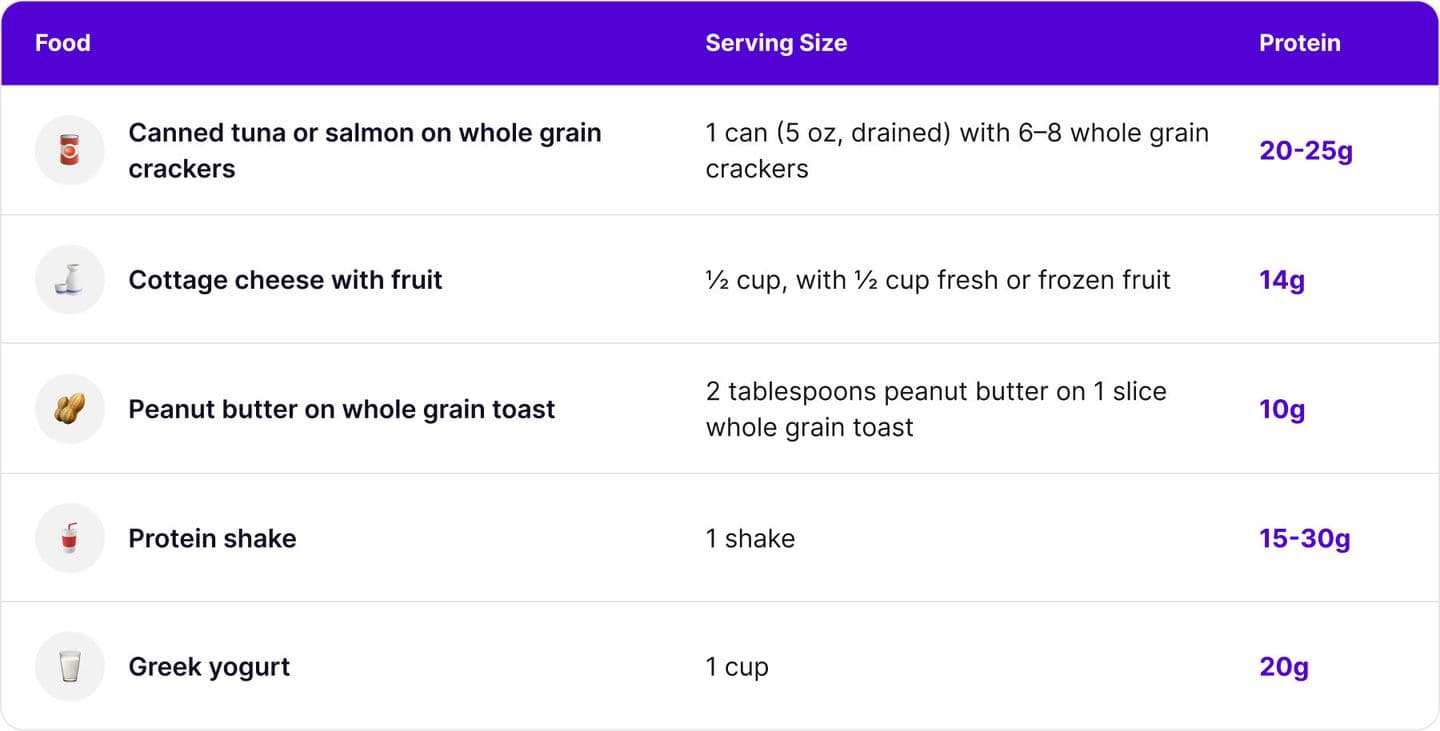
A note on protein shakes: these can really help with additional protein intake, especially if you have more of a gap to close, extra recovery needs, or dental issues that make it hard to chew or swallow. Think of a protein shake as a practical tool for getting more protein if you need it, not a replacement for food.
Simple cooking (under 15 minutes)
Protein and heart health
One of the most common sources of confusion around protein is the conflict between "eat more protein" and "cut back on meat and cheese for heart health." If you've heard both of these from different providers, you're not alone. But the good news is that you don't have to choose.
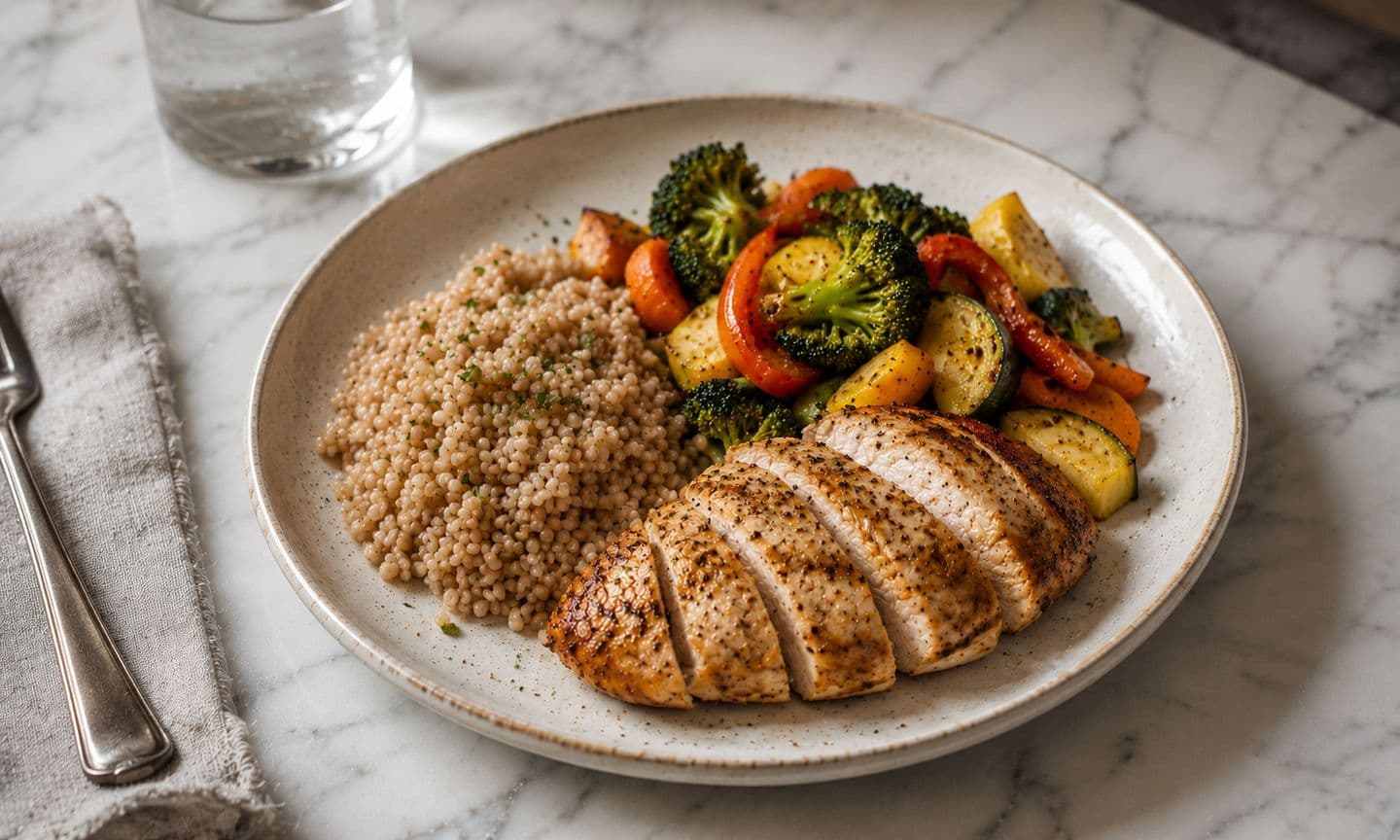
It's not one food that affects heart health. It's context. A slice of cheese on a sandwich is one thing. Eating extra cheese sausage and pepperoni pizza three or four nights a week is a different context entirely. The real issue for heart health is saturated fat and sodium, not protein itself. Leaner cuts of beef (like top sirloin, or 90/10 ground beef), fish, eggs, dairy, beans, and nuts are all protein-rich and heart-friendly.
The thinking that helps here is to stop treating foods as all good or all bad. That kind of black and white thinking about diet just doesn't work. Instead, think about context and proportions. Make the meat more of a side dish, and fill the rest of your plate with whole grains and veggies. Cheese and fruit can be a really nice snack. A glass of milk with breakfast is a simple way to add both protein and calcium without any saturated fat concerns.
And don't overlook the protein sources that are actively good for your heart: fatty fish like salmon (rich in omega-3 fats), walnuts and pistachios, beans and lentils, and soy products like tofu and edamame. These show up in every heart-healthy dietary pattern, including the Mediterranean diet. (Learn more about key food groups and nutrients for seniors.)
Three sample days, no cooking required
Knowing that you need 80 grams of protein is one thing. Seeing exactly what that looks like across a full day is another. Here are three approaches for people who don’t want to spend a lot of time in the kitchen.
The no-cook day
- Breakfast: Greek yogurt + handful of blueberries + handful of walnuts (~24g).
- Lunch: Deli turkey and cheese on whole grain bread + apple (~20g)
- Snack: String cheese + almonds (~13g)
- Dinner: Rotisserie chicken (store-bought) + bagged salad + whole grain roll (~28g)
- Total: ~85g
The five-minute day
- Breakfast: 2 scrambled eggs + whole grain toast + glass of milk (~22g)
- Lunch: Canned salmon on whole grain crackers + cottage cheese with fruit (~30g)
- Snack: Protein shake (~20g) or cottage cheese with fruit (~14g)
- Dinner: Bean and cheese quesadilla (tortilla + canned beans + cheese, microwaved) + pre-made salsa (~18g)
- Total: ~90g
The mix-and-match day
- Breakfast: Oatmeal made with milk + peanut butter stirred in + berries (~16g)
- Lunch: Leftover chicken over pre-washed greens + nuts + dressing (~28g)
- Snack: 1 Hard-boiled egg (homemade or store-bought) + handful of pistachios (~12g)
- Dinner: Frozen salmon fillet baked with pre-cut stir-fry vegetables + microwaveable brown rice (~28g)
- Total: ~84g
Notice that none of these days require more than 15 minutes of active cooking. The no-cook day requires exactly zero. And every one of them clears 80 grams.
Eating out, ordering in, and meal kits
Before we get into strategies, a reminder worth keeping close: we have one life and one body, and food should bring joy. If you're celebrating a birthday, enjoying a long dinner with family, or just having a night where you want the pasta and the bread basket, that is good and important. No judgment, no guilt, no mental math required. These tips are for the everyday meals where you want to make protein-smart choices without overthinking it. They're tools, not rules.
Restaurant ordering
The simplest habit to build is the “protein scan." When you look at any menu, find the protein first, then build around it. Grilled chicken or fish entrées, shrimp cocktail as an appetizer, a Greek salad with chicken, egg-based breakfasts, or soup with beans or lentils are all strong starting points.
Easy upgrades that most restaurants can accommodate: ask for a side of cottage cheese instead of fries, add grilled chicken to any salad, or order the salmon instead of the pasta. Speaking of pasta, dishes that are mostly bread, pasta, or rice without a clear protein source tend to leave a gap. That doesn't make them bad choices, but if protein is a goal, they're meals where you'll want to add something intentionally, like a side of grilled chicken or a cup of lentil soup.
Watch out for breaded and fried proteins. The protein is there, but it's buried under saturated fat and sodium. Same with cream-based sauces, which add calories without much protein.
Takeout and delivery
Some cuisines make protein easy without any special requests:
Rotisserie chicken places are one of the best-kept protein secrets. Buy a whole chicken and get three to four meals out of it. Pair with whatever sides you like. Note: rotisserie chicken can sometimes be high in sodium. If you’re on a low-sodium diet, make sure to check the nutritional facts before you order!
Mexican is excellent: a chicken or steak burrito bowl with beans, cheese, and salsa can easily clear 40 grams of protein in a single meal. Don’t skip the beans; they add both protein and fiber.
Japanese offers sashimi, chicken, salmon, or tofu teriyaki, edamame as a side (11 grams of protein per cup!), and miso soup with tofu – all great protein-forward options.,
Mediterranean restaurants serve grilled chicken or fish plates, yogurt dips, hummus with pita, and lentil soup. A chicken shawarma plate can hit 35 grams of protein or more.
Diner or breakfast-for-dinner is an underrated option: an omelet with cheese, scrambled eggs with a side of sausage, or even a classic eggs-and-toast order can deliver 20–25 grams.
Chinese works well if you lean toward chicken or shrimp with vegetables (steamed over fried), egg drop soup, or tofu dishes.
Whatever you order, a good rule of thumb: make sure there's at least one dedicated protein source on the plate. If there isn't, add one. Most restaurants will let you add grilled chicken or shrimp to any dish for a few dollars.
Meal kits and prepared meals
Meal kits can be helpful if you want variety without decision fatigue. They're pre-portioned, come with instructions, and they take a lot of the planning out of the equation. When evaluating any meal kit service, look for meals with at least 25 grams of protein per serving, clear nutrition labels, and options that accommodate dietary restrictions.
Many grocery stores now carry "heat and eat" prepared meals in the deli section. These can be great time-savers. Evaluate them the same way: check the label for protein per serving, keep an eye on sodium, and make sure the ingredients are things you'd recognize.
For every takeout or prepared meal, consider adding a glass of milk, of your choice. Regular dairy milk, lactose free, or even soy milks is a good and easy way to add protein and a calcium boost to any meal.
The protein pantry
The easiest way to consistently hit your target is to make sure protein is always within arm's reach. That means stocking your pantry, fridge, and freezer with options that require little to no preparation and last a long time.
Pantry (shelf-stable)
- Canned tuna, canned salmon, canned chicken.
- Canned beans: black, chickpea, white.
- Peanut butter or almond butter.
- Nuts: almonds, walnuts, pistachios.
- Low-sodium jerky.
- Shelf-stable protein shakes.
- Whole grain crackers (pair with any protein above).
Fridge (grab-and-go)
Greek yogurt. Cottage cheese. String cheese. Hard-boiled eggs (homemade or pre-made, available at most grocery stores). Deli turkey or chicken. Hummus. Milk.
Freezer (minimal prep)
Frozen salmon fillets: bake from frozen in 15 minutes or thaw overnight. Salmon is nutritionally rich with omega-3 fatty acids and high protein per serving, and it works as a hands-off oven dinner. Frozen shrimp: thaws under running water in five minutes and cooks in three to four. Frozen edamame: microwave, done in three minutes. Frozen chicken breasts for when you do feel like cooking. Frozen bean burgers.
If you stock even half of this list, you'll never be more than a few minutes away from a protein-rich meal or snack, regardless of whether you feel like cooking.
When to get personal
This guide gives you the general framework: how much protein to aim for, where to find it, and how to fit it into your life no matter how you eat. But your specific needs depend on your weight, your medications, your health conditions, your lifestyle, and your goals.
Everyone is unique and different. Someone managing diabetes, someone recovering from surgery, someone on a GLP-1, and someone focused on heart health may all need 80 grams of protein per day, but the best way to get there could look quite different for each of them. Medications can affect how your body absorbs nutrients. Health conditions can change which protein sources serve you best. And your personal preferences and daily routine matter too, because the best nutrition plan is the one you'll actually follow.
A Bold Care nutrition appointment can help you turn these general guidelines into a plan built for your body. Your provider can help you set an exact protein target, adjust for any medications that affect nutrient absorption, and build a sustainable approach that accounts for everything you're managing, whether that's heart health, diabetes, bone health, or simply staying strong and independent as you age. (Learn more about nutrition for healthy aging.)
More from Bold

Protein for seniors: How to get more and why it’s important
Protein for seniors is important for healthy aging. Learn how to get more protein and the best high-protein foods to try.

Nutrition for seniors: Your guide to healthy eating as you age
Why is nutrition important for seniors? As we get older, our bodies naturally go through changes that can affect everything from strength and mobility to memory, sleep, and digestion. Changes in our bodies can affect how we use and absorb nutrients,

Healthy eating tips with Bold trainer and certified nutritionist Meli Kirkwood
Bold trainer and certified nutritionist Meli Kirkwood shares practical healthy eating tips for older adults, including what to eat more of and what to limit.