Nutrition for women over 60: the complete guide to eating well after menopause
Learn about nutrition for women over 60, including insight on protein, nutrition for weight loss, bone health, heart health, cognitive health, hormone balance, and more.
Written by
Key takeaways
- After 60, women’s nutritional needs shift significantly due to menopause, muscle loss, and changing hormones. Prioritizing protein, fiber, and calcium is the foundation for maintaining muscle, protecting bones, and staying energized.
- There’s no single “best” diet, but the most consistent evidence points to a Mediterranean-style eating pattern with extra protein at every meal. Regular, structured eating matters as much as what you eat: skipping meals and restricting tends to backfire.
- The same foods that support weight loss also support your heart, brain, bones, and hormones: fatty fish, vegetables, whole grains, olive oil, nuts, and legumes.
- Your needs depend on your weight, medications, health conditions, and goals. A Bold Care appointment can help you build a personalized nutrition and weight management plan.
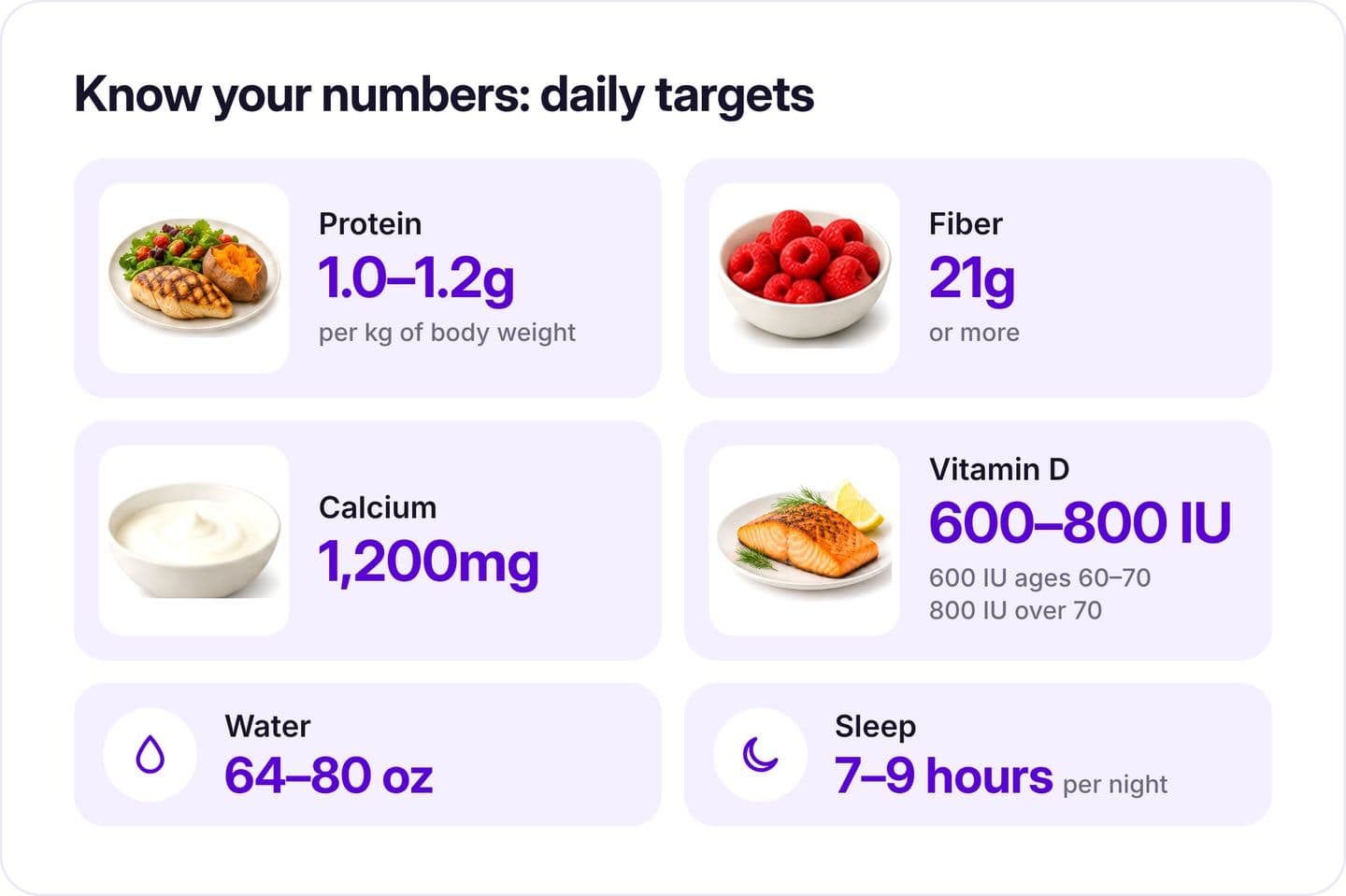
Daily health goals after 60
Metabolism after 60: what actually changes for women
You’ve probably heard that metabolism slows with age. That’s partly true, but the story is more nuanced. Let’s start with the foundation – your metabolism is the total energy your body uses in a day, made up of three parts:
- Basal metabolic rate (BMR): your “cost of living” — breathing, pumping blood, maintaining temperature, running your organs. For most people, this is the majority of daily calorie burn.
- Thermic effect of food: the energy it takes to digest what you eat, roughly 10% of your total. Some foods, like protein, take more effort to digest.
- Activity and NEAT: everything from a structured workout to walking to the mailbox or standing up from a chair. NEAT (non-exercise activity thermogenesis) is all the little movements that add up. Together, activity and NEAT account for about 28–40% of your total energy expenditure.
Lean body mass (muscle) is the single biggest driver of your BMR. After 60, muscle loss accelerates. If you’re not actively maintaining or rebuilding muscle, your BMR drops, which can contribute to weight gain – even if you’re eating exactly what you always have. Plus, menopause contributes an average shift of about five pounds toward the midsection. That belly fat isn’t a moral failing, it’s biology.
Proper nutrition for women over 60 helps offset these changes. At a high level, you’ll eat enough protein to build muscle, enough fiber to feel full, and enough calcium for strong bones. For a broader perspective, see our article How to lose weight as a senior: Weight loss tips for people over 60.
Weight loss for seniors, supported by a personalized nutritional plan
Book an appointment with a Bold Care provider to lose weight, reduce pain, and get your energy back. Your plan will include personalized nutritional support for weight loss.
What a healthy diet for women over 60 looks like
The research is clear: there is no single “best” diet. But the most consistent evidence points toward a Mediterranean-style diet with more protein than the traditional version – plenty of vegetables, fruits, whole grains, olive oil, fish, legumes, nuts, and seeds, with a deliberate emphasis on protein at every meal.
Regular, consistent eating is the #1 most important thing. Chaotic eating patterns like skipping breakfast, going five or six hours without food, or a light lunch and then a large dinner, drive what experts call “food noise”: constant background thoughts about food. Structured eating normalizes your hunger and fullness signals. If you’ve spent decades dieting, regular meals and snacks may feel uncomfortable at first. That’s okay. Your body needs time to recalibrate.
“Add in, pressure off.” Instead of “don’t eat that,” try adding fruits, vegetables, fiber, and protein alongside what you already eat. Restriction turns forbidden foods into a shiny object. Fill your plate with vegetables, lean protein, and fiber first, and healthier choices tend to take care of themselves.
Think about your plate. Half non-starchy vegetables (greens, peppers, broccoli, tomatoes, mushrooms), one quarter lean protein (chicken, fish, tofu, beans, eggs), one quarter whole grains (brown rice, quinoa, whole wheat pasta, sweet potato). Use hand-size portions as a rough guide.
And one thing that gets lost in most nutrition articles: food isn’t fully nutritious unless it also provides pleasure. A “perfectly clean” diet you dread isn’t healthy. The best healthy diet for women over 60 is one that nourishes you and that you actually look forward to.
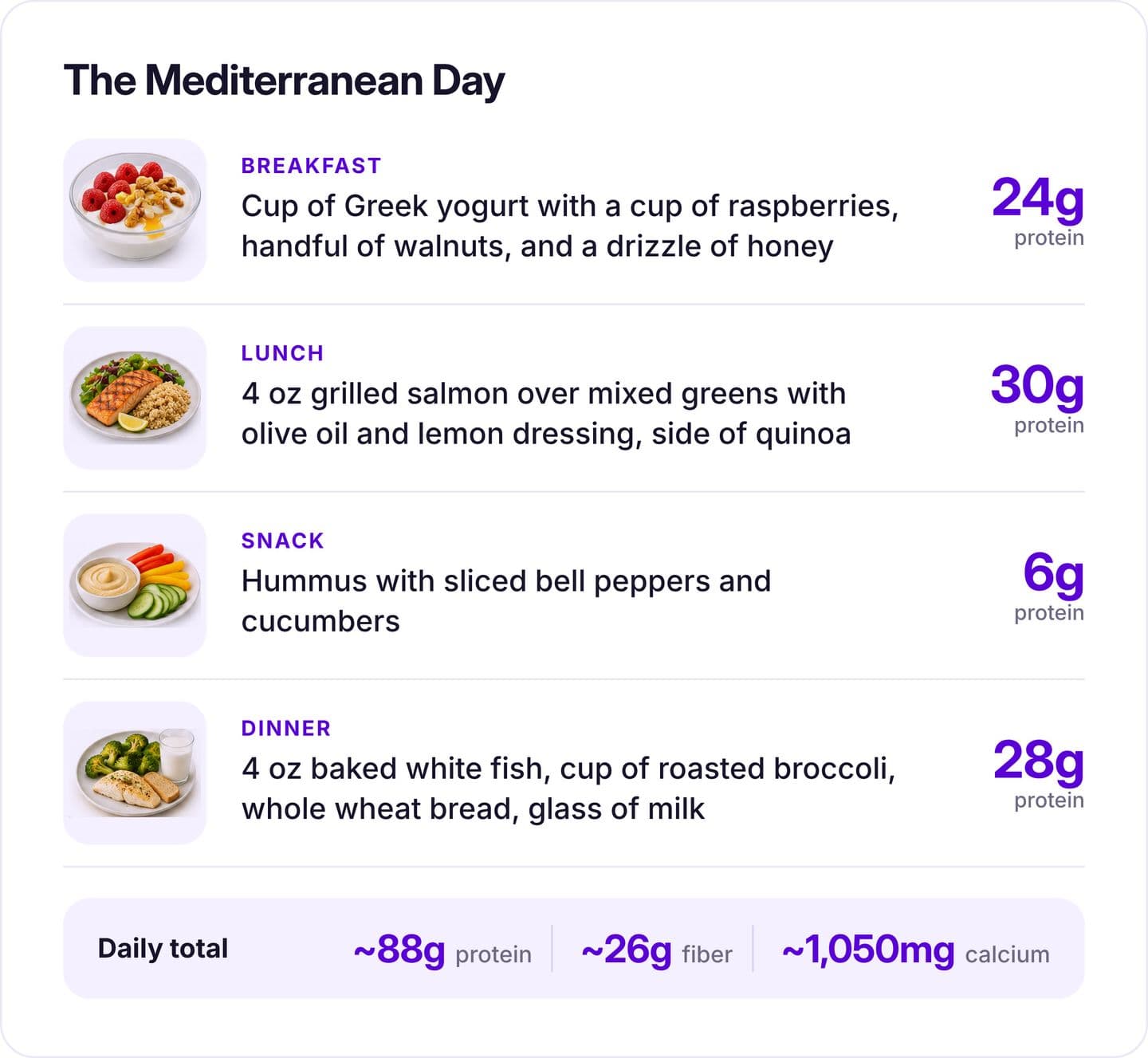
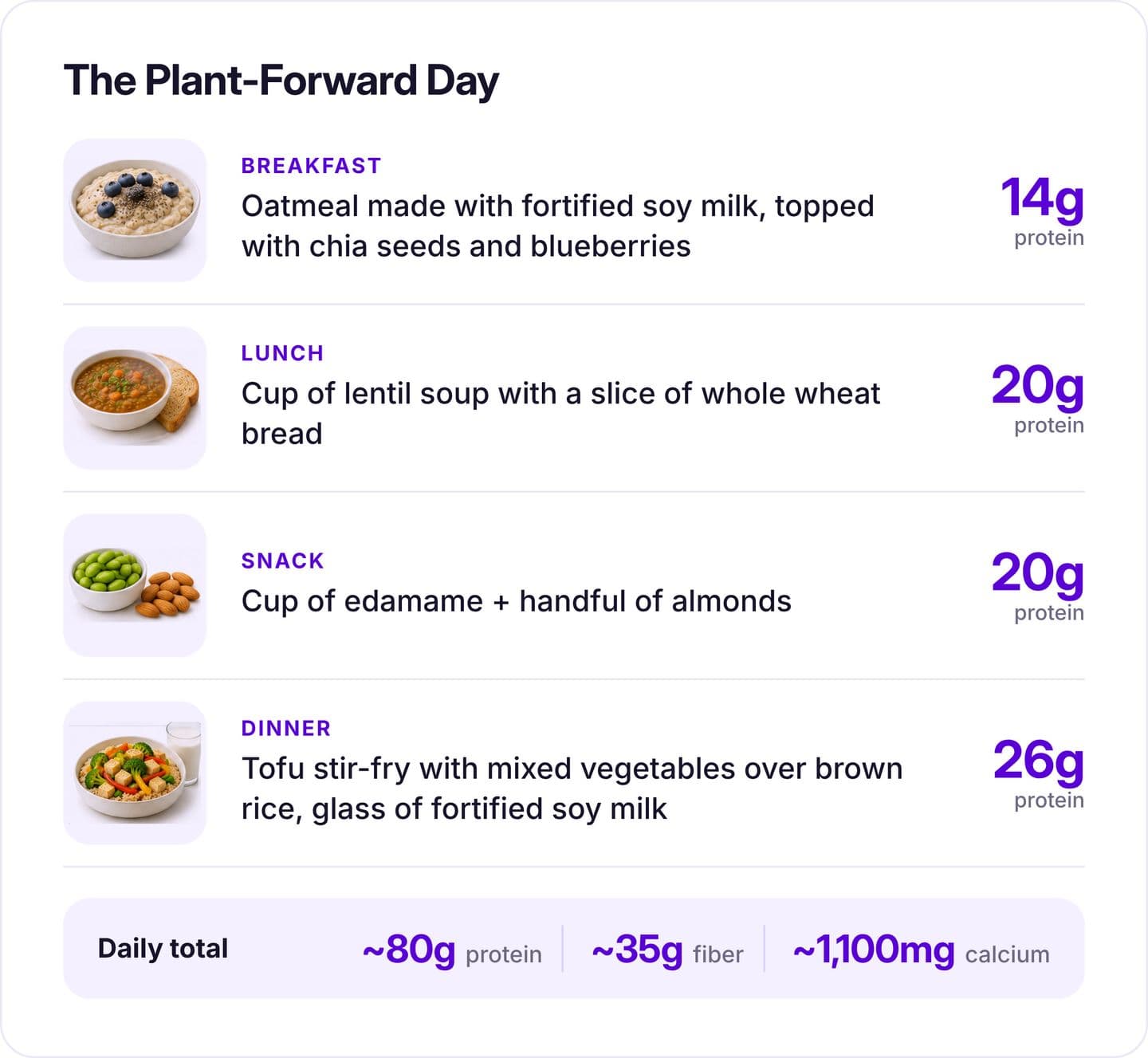
Three sample nutrition plans for women over 60
Each day includes foods rich in protein, fiber, and calcium, and none needs more than 15 minutes of active cooking. These are starting points, not prescriptions. Swap in the foods you enjoy.
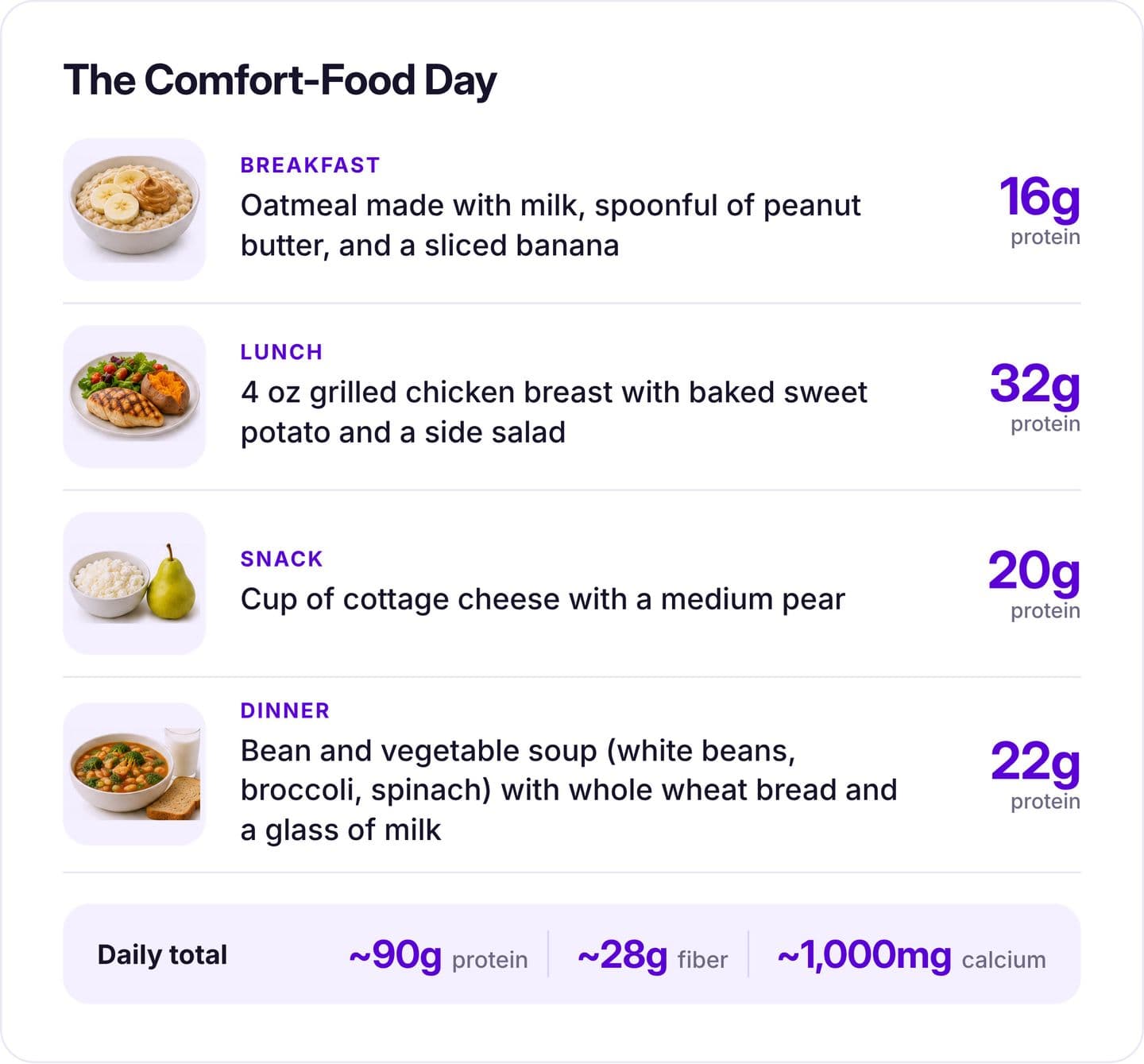
Protein for women over 60: the nutrient you’re probably not getting enough of
Protein is everywhere right now — protein water, protein cereal, high-protein Pop-Tarts. The hype is partly right, but the marketing has gotten ahead of the science. Protein really does matter more as you age, and understanding protein for women over 60 starts with a concept called anabolic resistance.
After about age 60, your muscles become less efficient at using the protein you eat. Your body still needs protein to maintain and repair muscle, but it takes more of it to get the same job done. And muscle isn’t just about strength. Muscle is a metabolic sink — it acts like a sponge for blood sugar, helping your body regulate glucose more efficiently. Muscle is also an endocrine organ that supports bone density. Less muscle means a slower metabolism, higher blood sugar, and weaker bones.
How much do you need? Divide your weight in pounds by 2.2 to get kilograms, then multiply by 1.0 to 1.2 (use the higher end if you have higher protein needs). That’s your daily target in grams.
Your protein formula: (body weight ÷ 2.2) × 1.2
Example:
- 160 lbs, 160 ÷ 2.2 is about 73 kg.
- Multiply by 1.0 to 1.2 for a target of roughly 73–88 grams per day.
You don’t need protein in every bite, but you do need it at every meal. Your body can only use so much at once, so spreading protein across every meal and at least one snack gives your muscles a steady supply throughout the day.
Certain conditions change the math:
- Chronic kidney disease: your protein needs are different — set your target with your provider.
- Surgery recovery or wound healing: needs may temporarily rise to the 80–100 gram range or beyond.
- GLP-1 medications like Ozempic or Mounjaro: protein is non-negotiable. These medications reduce appetite, and without intentional protein intake you can lose muscle along with fat.
For the complete breakdown — including a protein-intake cheat sheet by effort level, sample meal plans, and restaurant strategies — see the full Protein Guide for Adults 60+.
Fiber and gut health for women over 60
Fiber doesn’t get the attention that protein does, but it deserves a spot on your priority list. It helps you feel full, supports digestion, reduces inflammation, and can help lower your risk of heart disease, diabetes, and some cancers.
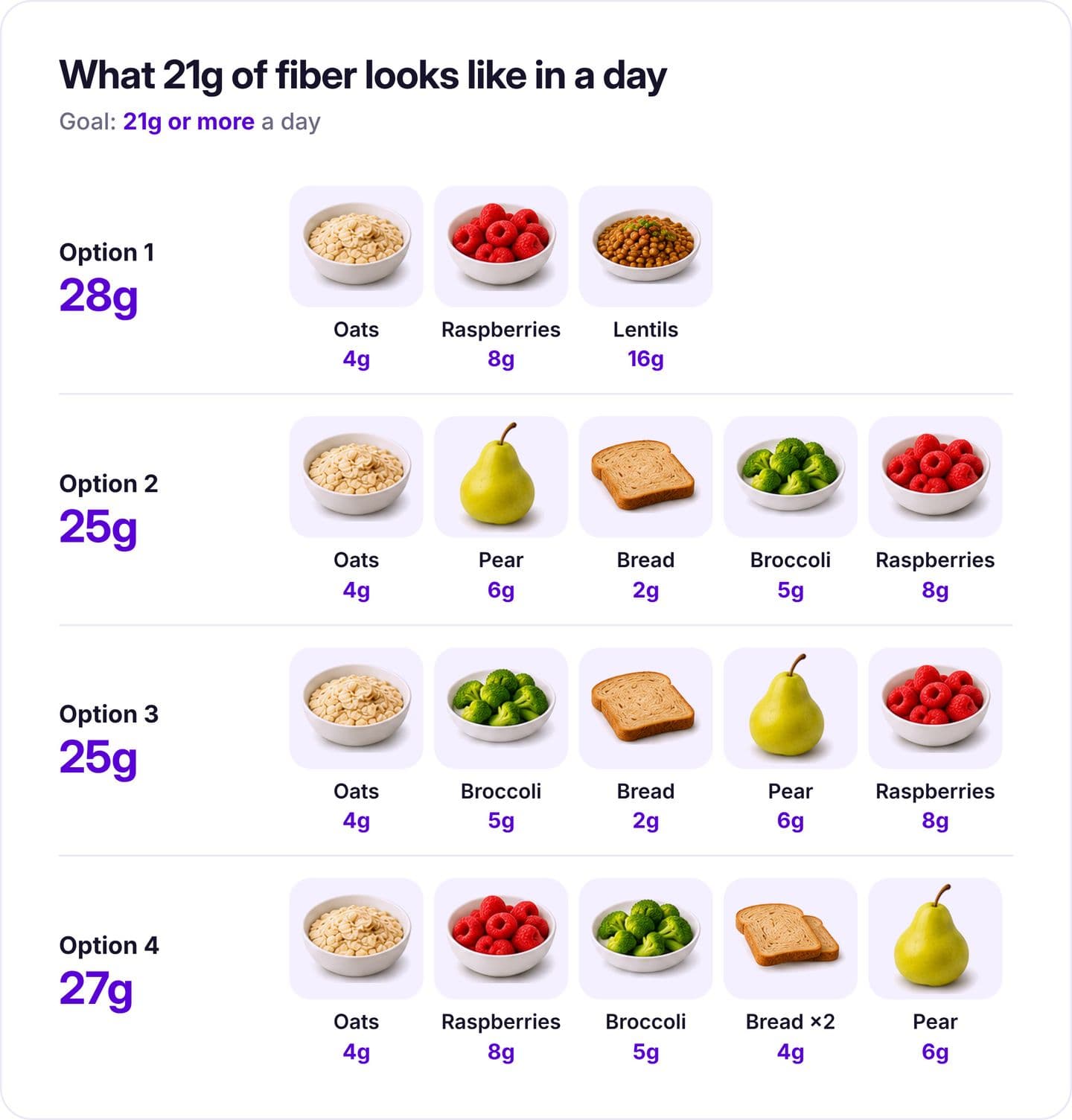
Most women over 60 should aim for at least 21 grams of fiber per day, and variety is key. Different types of fiber feed different gut bacteria, and a diverse microbiome is associated with better immune function, lower inflammation, and improved mood. Fruits, vegetables, whole grains, beans, lentils, nuts, and seeds all contribute different types.
If you’re not used to much fiber, increase it gradually – too much too fast can cause bloating. Give your gut a few weeks to adjust, and drink enough water, since fiber needs fluid to do its job.
Hormone health nutrition for women: menopause, estrogen, and what to eat
Hormone health nutrition for women starts with menopause — not a single event but a transition that reshapes your body’s operating system. Estrogen was doing a lot: protecting your bones, influencing where your body stored fat, helping manage cholesterol, supporting insulin sensitivity, and playing a role in sleep. When it declines, bone loss accelerates, fat redistributes toward the abdomen, cholesterol can change, blood sugar management may get less efficient, and sleep often suffers.
No food replaces estrogen, but several nutrients support the systems it was regulating:
- Soy and phytoestrogens (tofu, edamame, tempeh, soy milk): plant compounds that gently interact with estrogen receptors. The evidence is modest but consistent that soy-rich foods may ease some menopausal symptoms.
- Fiber: supports healthy estrogen metabolism and helps manage the cholesterol changes that often accompany menopause.
- Omega-3 fatty acids (salmon, sardines, walnuts, flaxseed): help manage inflammation and support heart health.
- Calcium and vitamin D: critical for bone health now that estrogen’s protection has diminished.
- Magnesium (nuts, seeds, leafy greens, whole grains): supports sleep, muscle function, and blood sugar regulation.
Changing hormones also disrupt sleep, and poor sleep makes weight management harder: it raises ghrelin (the hunger hormone) and lowers leptin (the fullness hormone), which magnifies cravings. Aim for 7 to 9 hours. Go to bed and wake up at the same time every day, keep your room cool, dark, and quiet, avoid screens before bed, limit caffeine to the morning, and skip alcohol in the evening. If you snore loudly, feel excessively tired during the day, or someone has noticed you stop breathing briefly during sleep, ask your doctor about sleep apnea screening. See our full guide to better sleep for seniors.
Nutrition supports hormone health at every stage, but it doesn’t replace hormone therapy. If your menopausal symptoms are significant, HRT is a conversation to have with your doctor.
Calcium for women over 60: how much you need for strong bones
Getting enough calcium for women over 60 is one of the most important and most overlooked parts of nutrition after menopause. Menopause accelerates bone loss, and osteoporosis affects more than 8 million American women — and it’s a condition nutrition can directly impact.
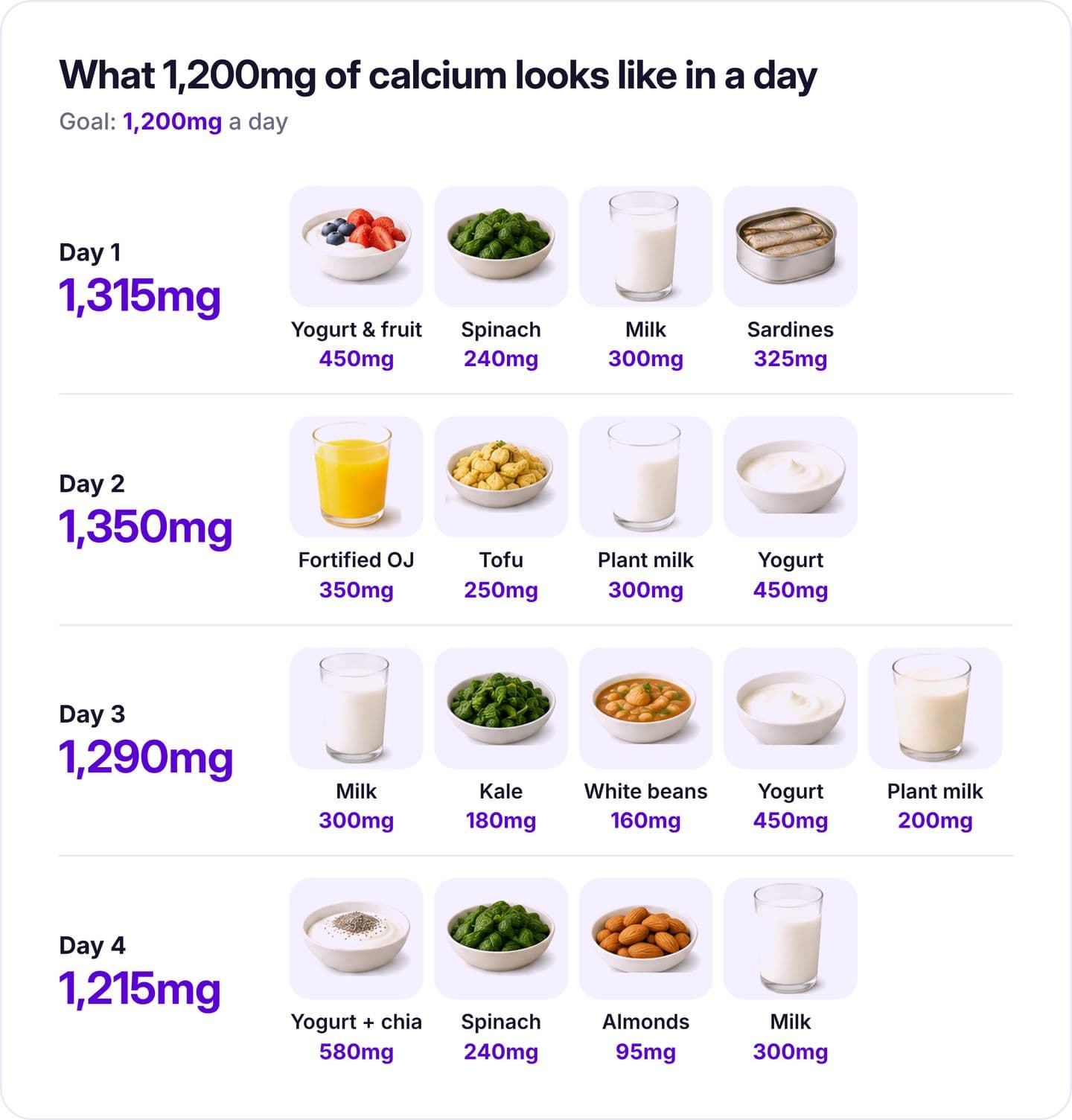
Women over 50 should aim for 1,200 mg of calcium and 600–800 IU of vitamin D per day. Women 60-70 should aim for 600 IU, and for women over 70, aim for 800 IU. Here’s what that looks like from real food.
Calcium: an 8-ounce cup of milk (about 300 mg, more than one-fifth of your daily needs); a cup of yogurt (about 450 mg); a cup of fortified plant-based milk (200–400 mg); a cup of cooked spinach (about 240 mg).
Vitamin D (which helps your body absorb calcium): an 8-ounce cup of milk (about 117 IU); a soy beverage (about 119 IU); 3 ounces of salmon (383–570 IU). Sunlight counts too, though many older adults don’t get enough sun exposure.
Supplements can help if food falls short, but talk to your doctor first — too much calcium from supplements (as opposed to food) has been associated with some cardiovascular concerns. Your doctor can check your levels and recommend the right dose.
Protein supports bones, too. Adequate protein combined with strength training is one of the most effective strategies for bone density. But nutrition alone won’t build bone – you also need the mechanical loading from resistance exercise.
DEXA scans, the gold standard for measuring bone density, are covered by Medicare every two years for higher-risk adults. If you haven’t had one, ask your provider.
For more, see our guide to bone health for seniors.
Heart health nutrition for women: eating for cholesterol and blood pressure
Heart disease is the leading cause of death for women, and the risk climbs after menopause. When it comes to heart health nutrition for women, diet is one of the most powerful tools we have.
There’s a common misconception that eating high-cholesterol foods like eggs raises your blood cholesterol. For most people, that’s not how it works. The bigger culprit is saturated fat — fatty cuts of red meat, full-fat cheese, butter, and processed meats like bacon and sausage. Saturated fat triggers your liver to produce more LDL (“bad”) cholesterol, which raises heart disease risk.
In practice, you don’t need to avoid eggs (a great source of protein and nutrients) or cut out cheese. You do want to watch how much saturated fat shows up across your whole day. Lean meat, fish, poultry, eggs, and low-fat dairy are fine for most people.
Meanwhile, soluble fiber (oats, beans, lentils, apples, citrus) actively reduces cholesterol absorption in your digestive tract. Adding these foods to your rotation is one of the simplest heart-healthy moves you can make.
Genetics matter, too. Familial hypercholesterolemia is more common than most people realize. If your cholesterol is high despite eating well and exercising, it may be your genes, not your choices.
Know your numbers: request a full lipid panel plus Lp(a) and ApoB testing, and ask for a calculated cardiovascular risk score so you and your provider can set targets for your situation.
For high blood pressure, the DASH diet (Dietary Approaches to Stop Hypertension) is one of the most well-studied recommendations: increase potassium (bananas, sweet potatoes, spinach, beans), magnesium, and calcium; decrease sodium. More fruits, vegetables, whole grains, and lean protein; less processed food and restaurant meals, which tend to be loaded with salt.
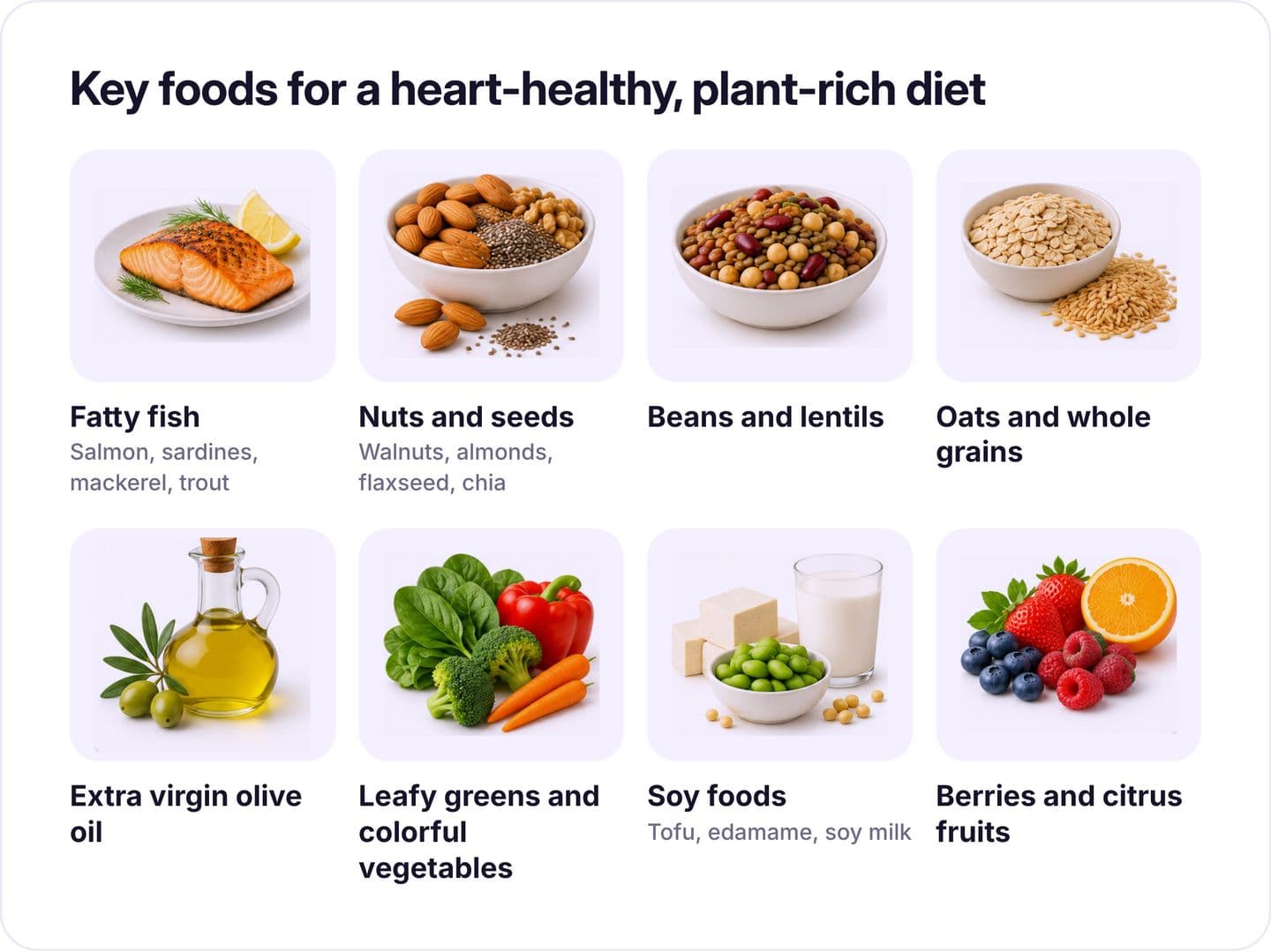
What a heart-healthy diet looks like:
- Fish twice a week (especially fatty fish like salmon and sardines for omega-3s).
- Plenty of vegetables and fruits at every meal.
- Choose whole grains over refined (whole wheat bread over white bread, for instance).
- Use olive oil as your primary cooking fat.
- Eat beans and lentils regularly.
- Opt for nuts as a snack.
- Limited processed meats, fried foods, and heavily salted items.
This isn’t a special “heart diet” — it’s healthy eating that also supports your heart, which matters most after menopause, when estrogen’s cardioprotective effects decline.
Weight loss for seniors, supported by a personalized nutritional plan
Book an appointment with a Bold Care provider to lose weight, reduce pain, and get your energy back. Your plan will include personalized nutritional support for weight loss.
Brain health nutrition for women over 60: eating to protect memory
Women make up roughly two-thirds of Alzheimer’s cases. No single food prevents cognitive decline, but brain health nutrition for women over 60 is a modifiable risk factor you can act on. Certain foods lower inflammation and boost antioxidants, which may reduce Alzheimer’s risk, and certain eating patterns lower your risk of diabetes, obesity, and heart disease — all independent Alzheimer’s risk factors. What’s good for your heart and blood sugar tends to be good for your brain.
Six brain-healthy habits (adapted from brain health researcher Dr. Annie Fenn):
- Eat cruciferous and colorful vegetables and mushrooms regularly — broccoli, cauliflower, kale, bell peppers, berries, mushrooms.
- Eat nuts and seeds at least four times a week — walnuts, almonds, flaxseed, chia seeds.
- Use extra virgin olive oil as your primary cooking and dressing fat.
- Limit fast food and fried food.
- Minimize ultra-processed food. If the ingredient list reads like a chemistry textbook, it’s probably ultra-processed.
- Cut back on sweetened drinks, including soda, sweetened teas, and fruit juices with added sugar.
The MIND diet, developed at Rush University, combines the Mediterranean and DASH diets with a focus on the brain. It emphasizes leafy greens, berries, nuts, whole grains, fish, poultry, olive oil, and beans, and limits the five food groups most strongly associated with cognitive harm: red meat, butter, cheese, pastries, and fried or fast food. Even moderate adherence to the MIND diet is associated with a slower rate of cognitive decline. If you’re already eating as described above, you’re most of the way there.
Watch your B12. Low vitamin B12 can cause cognitive symptoms that mimic Alzheimer’s — but unlike Alzheimer’s, it’s treatable. Get enough through diet (fortified breakfast cereals, fish, beef, Greek yogurt) and ask your doctor to check your levels regularly, especially if you take metformin or proton-pump inhibitors, which can interfere with absorption. See our guide to 6 foods to prevent Alzheimer’s.
Hydration for women over 60: why you’re at higher risk
Nutrition isn’t just about food. Thirst diminishes with age, so by the time you feel thirsty you may already be mildly dehydrated. Dehydration stresses your kidneys, raises blood sugar, contributes to constipation, and can cause dizziness and confusion — symptoms sometimes mistaken for other conditions.
Many older women under-drink because of incontinence worries, but dehydration can irritate the bladder and make incontinence worse. Your urine should look like pale lemonade. Dark urine, constant thirst, or frequent urination are signs to get checked by your doctor.
Target 64 to 80 ounces of water per day, more if it’s very hot, you’re sick, or you have a fever. Keep a water bottle within arm’s reach, drink a glass with every meal and snack, eat water-rich foods (cucumber, watermelon, oranges, soups, berries), and swap sweetened drinks for water, sparkling water, or herbal tea. Hydration matters more as you raise protein, too — your body needs water to process it, so as you work toward that 80–100 gram target, your fluid intake needs go up.
Weight loss nutrition for women over 60: what works and what doesn’t
Nutrition for women over 60 isn’t only about weight loss, but it can certainly help. The key is losing fat, not muscle. Muscle keeps you strong, independent, and metabolically active; losing it makes future weight management harder and increases fall risk. Your plan should protect muscle while creating the conditions for fat loss.
What works: protein to protect muscle (80–100 grams per day) plus a balanced plate of vegetables, whole grains, and healthy fats to keep you full; regular resistance training to maintain and build lean tissue; structured eating at consistent times, paired with adequate sleep and hydration. A simple approach to weight loss nutrition for women is the one that’s easiest to stick with.
What doesn’t work:
- Restrictive diets and eating too little. Dropping below about 1,000 calories a day slows your metabolism — feeling cold, tired, and constipated are the classic signs. Under-eating doesn’t accelerate weight loss; it often stalls it.
- Metabolism-boosting supplements. Research is limited and they’re often dangerous. Avoid them.
- Being too hard on yourself. Food is also celebratory. A birthday party, the bread basket, a second slice of pie at Thanksgiving — all ok. Don’t let perfect be the enemy of good.
Body changes with age are inevitable. Approach them with curiosity and compassion, and track non-scale victories: blood pressure, A1C, energy, how your clothes fit, how easily you get up from a chair, how well you sleep. These matter as much as the scale, and often more.
GLP-1 medications can be a helpful tool, and you may be eligible for GLP-1s covered by Medicare for a $50 copay.
Weight loss for seniors, supported by a personalized nutritional plan
Book an appointment with a Bold Care provider to lose weight, reduce pain, and get your energy back. Your plan will include personalized nutritional support for weight loss.
How Bold helps with weight loss nutrition for women over 60
This guide gives you the general framework. A personalized plan depends on your weight, medications, health conditions, kidney function, sleep, and — just as importantly — a plan that fits your lifestyle. Someone managing diabetes, recovering from surgery, taking a GLP-1, or focused on heart health may all need 80 grams of protein a day, but the best way to get there looks different for each.
A Bold Care appointment includes:
- 45 minutes with a lifestyle medicine provider — not a rushed 10-minute visit
- A comprehensive look at nutrition, movement, sleep, and stress
- Personalized protein and calorie targets based on your body, medications, and goals
- Monthly check-ins to adjust your plan as things change
The Bold Weight Loss clinic treats weight loss differently. When older adults lose a lot of weight quickly, 25% of it can be the lean muscle and bone that keeps you strong. Most programs don’t account for that; Bold does. We focus on losing fat, not strength, so you can feel lighter while doing more. Our board-certified doctors and nurse practitioners provide nutritional plans, exercise recommendations, and GLP-1 prescriptions where appropriate.
No referral is needed. Bold is covered by many Medicare Advantage plans and certain Original Medicare plans. 78% of patients pay $0. Book your appointment today.
What foods support brain health for women over 60?
An anti-inflammatory eating pattern: cruciferous and colorful vegetables, berries, nuts and seeds, fatty fish, extra virgin olive oil, and mushrooms. The MIND diet emphasizes these while limiting red meat, butter, cheese, pastries, and fried food, and even moderate adherence is associated with slower cognitive decline.
Can nutrition help with menopause symptoms?
It can, though it’s not a replacement for hormone therapy if symptoms are significant. Soy and phytoestrogens may ease some symptoms, fiber supports estrogen metabolism, omega-3s help manage inflammation and support heart health, and magnesium supports sleep, muscle function, and blood sugar regulation. A consistent sleep routine matters as much as what’s on your plate.
How much calcium should a woman over 60 get daily?
Women over 50 should aim for 1,200 mg of calcium and 600–800 IU of vitamin D (600 IU for ages 60–70, 800 IU over 70). Get as much as possible from food — a cup of yogurt delivers about 450 mg, an 8-ounce glass of milk about 300 mg — and talk to your doctor before supplementing, since too much calcium from supplements has been linked to some cardiovascular concerns.
What is the best diet for women over 60?
There’s no single “best” diet, but the most consistent evidence supports a Mediterranean-style pattern with extra protein: vegetables, fruits, whole grains, olive oil, fish, legumes, nuts, and seeds, with protein at every meal. Regular, structured eating matters as much as what you eat, because skipping meals can drive cravings.
How much protein does a woman over 60 need per day?
Most experts recommend 1.0 to 1.2 grams per kilogram of body weight: divide your weight in pounds by 2.2, then multiply by 1.2. For a 160-pound woman, that’s roughly 73–88 grams per day. Spread it across every meal and at least one snack, since your body can only use so much at once.
Weight loss for seniors, supported by a personalized nutritional plan
Book an appointment with a Bold Care provider to lose weight, reduce pain, and get your energy back. Your plan will include personalized nutritional support for weight loss.
More from Bold

Does Medicare Cover GLP-1s for Weight Loss? The Medicare GLP-1 Bridge Program Explained
Medicare now covers certain FDA-approved GLP-1 weight loss drugs for eligible beneficiaries, for a $50 monthly copay. Here's how the Medicare GLP-1 Bridge program works, who qualifies, and how to access it.
Webinar: Intro to Bold Care's Weight Loss Program
Watch this webinar to learn more about Bold's weight loss program, covered by Medicare, and how you can get started.

Are GLP-1s safe for older adults? What you need to know about weight-loss medications over 60
Learn about GLP-1s and aging, plus how to pair medication with lifestyle changes for weight-loss success.