How to relieve sore knees: Exercises, lifestyle changes, and other treatment options
You can relieve sore knees with over-the-counter pain medications, lifestyle tweaks, and physical therapy. Learn more about exercises for knee pain for seniors.

Reviewed by
Key takeaways
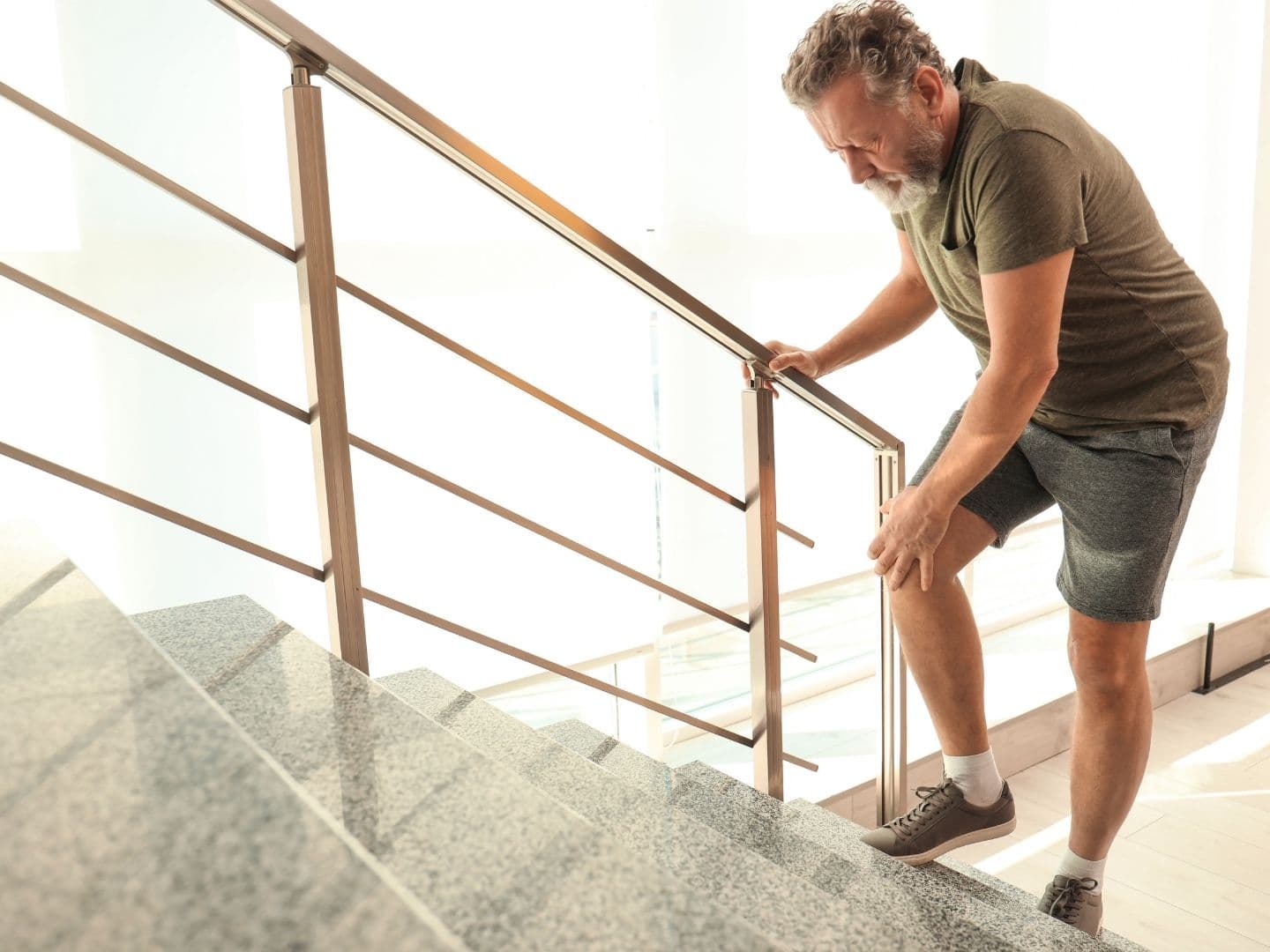
- Sore knees are one of the most common complaints in older adults. Causes range from arthritis and bursitis to tendon injuries and IT band syndrome.
- To relieve sore knees, strengthen the muscles around the joint, especially the quads, hamstrings, and glutes.
- Lifestyle changes that help knee pain include regular exercise, keeping a healthy weight, wearing supportive footwear, and proper warm-ups.
- When exercise and lifestyle changes aren't enough, ask your doctor about medications, injections, and other options.
Book an appointment with a Bold Care provider to make a plan to relieve your knee pain.
About a quarter of all adults will experience knee pain at some point in their lives. There are lots of different reasons your knees might be sore, and figuring out what’s causing your pain is often the first step in identifying how to treat it.
Here, learn more about common causes of sore knees, some of the best knee exercises for pain, and what to do when exercise alone isn’t enough to keep you pain-free.
Understanding knee pain
Knee pain is an umbrella term for any kind of discomfort you feel in your knee joint. Because your knees absorb and support a lot of your weight throughout daily activities and exercise, they’re among the most commonly injured joints in your body. The pain can go away quickly, last for a brief period of time, or linger for the long term.
It can also be aggravated by certain actions, such as bending your knees or getting out of bed first thing in the morning.
Common causes of knee pain
There are many possible causes of knee pain. Some are acute (or short-term injuries or damage), while others are chronic or ongoing.
Acute injuries and damage
- Ligament injuries: Ligaments are the tissues that connect bones to other bones. There are several inside and around the knee joint, and any of them can be stretched or torn, causing pain. One of the most common ligament injuries of the knee is a tear in the anterior cruciate ligament (ACL), often caused by changing directions in sports.
- Tendon injuries: Tendons are the tissues that connect muscles to bones. You have two in your knees that connect your thigh muscles to your knee caps and leg bones. These can be inflamed (called tendonitis) or stretched or torn and cause pain.
- Injured cartilage: This typically refers to a tear in the rubbery tissue that cushions your knee joint called the meniscus.
- Fractures: Broken bones that cause knee pain, like in the knee cap, are usually the result of falls, car crashes, and other high-impact trauma. You might also experience a bone stress injury, often called a stress fracture. This is a small crack in a bone due to overuse, and it’s more common in older adults with lower bone density or osteoporosis.
- Dislocations: Dislocations are typically linked with high force or traumatic events, such as a car crash or contact in sports, which cause bones to move out of place.
Conditions
Sometimes knee pain is caused by a diagnosable health problem, such as:
- Arthritis: There are many types of this joint disease, but the most common is osteoarthritis, which happens when tissues in the joint break down over time, causing inflammation, pain, and stiffness.
- Bursitis: A bursa is a small, squishy sac that acts as a cushion between bones and other tissues. When these sacs are inflamed, they can cause pain and pressure, including in the knee.
- Patellofemoral pain syndrome: This is a catch-all term for pain in the front of the knee where the kneecap slides over the thigh bone. It can be caused by overuse, and it’s also sometimes called runner’s knee.
- Iliotibial (IT) band syndrome: Pain on the outside of the knee is often due to irritation or inflammation of the thick band of connective tissue on the outside of the thigh, called the iliotibial (IT) band. Overuse and weak glute muscles can contribute to IT band syndrome.
Symptoms of sore knees
Knee pain can range in severity and be accompanied by other sensations, such as:
- Swelling
- Redness and warmth
- Aching
- Pain when bending the knee
- Difficulty straightening the knee
- Instability, weakness, and buckling
Lifestyle changes to prevent knee pain
Some knee pain may be unavoidable, such as due to the effects of an injury. But other factors that lead to knee pain are well within your control, and you can take steps to avoid this discomfort.
Incorporating daily movement
A regular exercise routine is one of the best ways to help prevent knee pain. Consistently moving your joints through their range of motion helps prevent pain and stiffness. Strengthening the muscles around your knees takes pressure off of the joints.
You can also scale back the load on your knees. If you notice your knees hurt after a certain intensity of an activity, reduce the intensity slightly next time and build your way back up.
And properly warming up and cooling down can help prevent injury. That said, it’s always a good idea to get cleared by your doctor before beginning any new exercise program, even if you don’t currently have knee pain.
Proper footwear choices
High heels may look fashionable, but they’re bad news for your knees (not to mention plenty of other joints). Flat, flexible shoes have been shown to reduce pressure on the knees and help people with knee osteoarthritis walk more comfortably. “The best options are generally low-heeled, flexible shoes that allow for a more natural gait — think well-cushioned walking shoes or supportive sneakers,” says Bold Care provider Dr. Afua Agyarko. “High heels shift your body weight forward and alter your alignment all the way up your body, increasing load on the knee joint with every step.”
The right footwear for you also depends on your anatomy, so you can also experiment with orthotic inserts or arch support and see how your body responds. You can always reach out to a healthcare provider, like a physical therapist, for more guidance on different types of support for your shoes.
Importance of weight management
Obesity and weight gain are both associated with higher chances of knee pain and specific conditions such as osteoarthritis of the knee.
Your weight alone does not guarantee future knee pain, but maintaining a healthy weight may help lower your odds of discomfort. Losing 10 to 20 percent of your body weight if you’re carrying excess weight has been associated with less pain and better functioning and quality of life in people with knee osteoarthritis, for example.
Manage your knee pain
Book an appointment with a Bold Care provider to get a personalized plan to relieve your knee pain.
Exercises for knee pain relief
Sometimes it’s a little too late for prevention. If you’re already experiencing discomfort, you’re probably looking for some tips to relieve sore knees. Here’s what might help.
Knee-strengthening exercises
“Strengthening the knee” really refers to strengthening the muscles that support it. That helps take pressure off the joint while also increasing your ability to do more with less pain.
That means some of the best exercises for knee pain build strength in the quadriceps, hamstrings, glutes, and calves.
If you’re just getting started, remember you can always modify movements if knee pain feels like a barrier. First, make sure your healthcare provider has confirmed that it’s appropriate for you to move on your own. Then, experiment a little. Be open to trying new and different ways to move, and reflect on how you feel in the moment and how your body responds after.
Once you get more comfortable with these movements over time, you’ll feel even more confident to continue experimenting with additional ways to move your body.
Squats
- Start standing with your feet comfortably apart, arms by your side, knees in line with your feet.
- Push your hips back and keep your chest up as you bend your knees to lower your body until you are as low as you can comfortably go). Keep your chest up and your gaze forward.
- Press evenly through your feet to return to standing. Stand up straight through your knees and hips.
If you could use some additional support, consider doing a chair squat, where you squat in front of a chair as if you were going to sit on it. Learn other ways to squat with knee pain in this Bold Talk: Modifications for Knee Pain.
Standing hamstring curls
- Start standing holding onto the back of a chair or a wall for balance.
- Bend one knee and raise your heel as far as you can toward your glutes. Keep your foot flexed and your knees close together.
- Pause briefly, then lower your foot back to the floor.
- Repeat on the other side.
For an extra challenge, you can do this exercise wearing ankle weights if you have them at home.
Leg extensions
- Start sitting on a sturdy chair with your back against the back rest, knees bent, feet flat on the floor.
- Squeeze your thigh muscles and slowly raise one leg until it’s parallel to the floor.
- Pause briefly, then lower your foot back to the floor.
- Repeat on the other side.
Calf raises
- Stand on the edge of a step holding the wall or railing for balance with your heels and midfoot hanging off the step.
- Press through the balls of your feet to raise your heels as high as possible until you’re standing on your tiptoes. Keep your knees straight but not locked out.
- Pause briefly at the top.
- Lower your heels slowly and with control until they’re below the step to feel a stretch in your calves.
You can find lots of options for strength-training classes to follow along with on Bold’s exercise platform that can help relieve sore knees. You’ll even find some classes that are done entirely sitting down.
Stretches for knee pain
In addition to strengthening the muscles around aching knees, it’s smart to stretch, too. Stretches for knee pain help keep your muscles flexible, allowing you to move your knees more comfortably.
Standing quadriceps stretch
- Start standing holding onto the back of a chair or a wall for balance.
- Bend one knee and bring that heel up toward your glutes. Hold your ankle and gently pull your heel closer to you. Make sure you’re not arching or twisting your back as you pull. Optional: You can also use a strap wrapped around your foot to pull your heel closer to you.
- Hold for 30 to 60 seconds.
- Repeat on the other side.
Lying hamstring stretch
- Start lying on your back on the floor with your knees bent and feet flat.
- Lift one leg and bring your knee toward your chest. Hold the back of your thigh below your knee with both hands. Optional: If this is challenging for you, you can loop a towel around the back of your thigh instead.
- Straighten your leg and gently pull it toward you until you feel a stretch in the back of your thigh.
- Hold for 30 to 60 seconds.
- Repeat on the other side.
If getting into this position feels challenging, recreate the same stretch in a chair. Sit with your leg straight out in front of you. Bend forward from your hips to bring your belly closer to your thigh.
Bold’s exercise platform has plenty of stretching-focused options for you to try, including mobility, flexibility, and yoga classes.
Physical therapy
A physical therapist can perform a more thorough examination and create a tailored program to help you identify the root cause of and make a plan to manage your condition.
The treatment and plan the physical therapist offers may also incorporate other pain management interventions aside from exercise, such as soft tissue work, dry needling or cupping, taping, or bracing. You might also learn tweaks for how you do certain daily activities to limit pain or to manage challenges or barriers to recover.
You can contact a local physical therapy office for an assessment or ask your doctor for a recommendation for a trusted provider.
Other knee pain treatments
If lifestyle adjustments and exercises don’t help with knee pain, or if your knee pain gets worse, it’s time to talk to a doctor. They might recommend some additional options for knee problems, such as the following.
Medications for knee pain
Your doctor may recommend a variety of over-the-counter and prescription treatments, depending on the cause of your knee pain and your symptoms.
Over-the-counter treatments
Over-the-counter pain relievers like acetaminophen and anti-inflammatories like ibuprofen and naproxen are among the first medications you might try for knee pain. “Generally, these are a good starting point for people with mild to moderate knee pain who have no major contraindications — meaning they don't have kidney disease, stomach ulcer history, or cardiovascular concerns that might make them risky,” Dr. Agyarko says. “That said, these medications are intended for short-term use, so anyone relying on them regularly should check in with their doctor.”
You can also find over-the-counter topical pain relievers that you rub directly on your sore knees for relief. “Topical pain relievers can be a smart alternative — or addition — for people who want more targeted relief with less systemic exposure,” Dr. Agyarko says. “They're especially worth considering for older adults, people who are sensitive to the GI side effects of oral anti-inflammatories, or those taking multiple medications where drug interactions are a concern.”
Prescription treatments
Your doctor might offer other options, such as antirheumatic drugs or corticosteroid injections to reduce inflammation.
Some may even offer cutting-edge therapies like platelet-rich plasma (PRP) injections, which use components of your own blood to help repair tissues in your knees, although more research is needed to fully understand the risks and benefits of this procedure.
Surgery
Exercise, lifestyle changes, and medication are the mainstays of knee pain treatment, even if you also have surgery. Surgery can be appropriate when you have damaged tissue that leads to joint instability. It may help to prevent worsening of the condition, or when other treatments have not been effective.
Talk to your doctor about whether you might be a good candidate for knee pain surgery.
You can speak with a Bold Care provider to discuss your knee pain and create a plan to help you manage it from the comfort of your own home!
Manage your knee pain
Book an appointment with a Bold Care provider to get a personalized plan to relieve your knee pain.
More from Bold
How to relieve lower back pain: Causes, symptoms, and exercises to try
Lower back pain can be caused by injuries or degenerative diseases, causing sharp or aching pain. Learn how to relieve lower back pain with exercise.
Physical activity for seniors: Benefits, guidelines, and how to start safely
Discover the benefits of physical activity for seniors, including CDC guidelines, safety tips, and how to start exercising at any age.
Chair workouts for seniors: Your top 5 questions, answered
Discover the benefits of chair workouts for seniors: build muscle, improve balance, and stay safe while seated. Get started with simple exercises at home.