Tackling the chronic disease epidemic for seniors
The most common conditions adults 65 and older are living with share the same modifiable risk factors. Personalized virtual programs for seniors managing chronic conditions that bring together lifestyle-focused education, community resources, and guided movement programs lower costs, boost Star Ratings, and improve health outcomes for MA plans.

The chronic disease burden of America’s senior population is continuing to grow. Today, 93% of adults over 65 have a chronic condition, and nearly 80% have 2 or more.
Taking a root-cause approach to addressing seniors’ chronic conditions is increasingly in focus at the policy level, with CMS unveiling a raft of programs – including ACCESS, BALANCE and MAHA ELEVATE – that emphasize lifestyle interventions as a first-line defense against chronic illness.
Years of clinical studies and evidence supports this approach. According to the CDC, 4 in 5 of the costliest chronic diseases impacting seniors can be managed or mitigated through lifestyle interventions including regular physical activity, nutrition, and quality sleep.
With a laser focus on reducing cost of care and keeping beneficiaries healthy to avoid acute flare-ups or escalations in severity, Medicare Advantage plans bring a proactive approach to chronic condition management – including care coordination, remote patient monitoring (RPM), and programs aligned with CMS Star Ratings including medication adherence, preventive screenings, and efforts to reduce readmissions. Plans are also doubling down on specialized offerings for these populations, with enrollment in C-SNP plans increasing by more than 70% between 2024 and 2025.
Yet lifestyle interventions too often take a backseat in members’ programs and care plans, not given the same level of priority or investment as other cost drivers.
In this article, we’ll explore why leading MA plans are investing in personalized virtual programs that bring together lifestyle-focused education, community resources, and guided movement for seniors managing chronic conditions to lower costs, boost Star Ratings, and improve health outcomes for more members.
Where costs concentrate for Medicare Advantage
The cost burden for MA plans from chronic conditions correlates to prevalence. The most common conditions that adults 65 and older are living with share the same modifiable risk factors: sedentary behavior, poor metabolic health, excess weight, suboptimal nutrition, sleep issues, and under-managed stress.
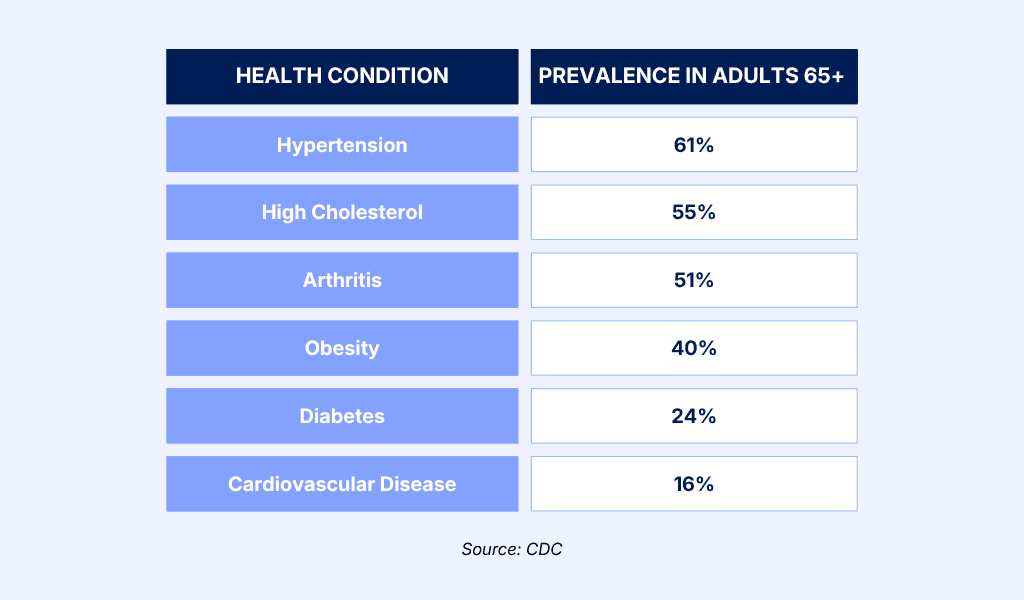
Treatment pathways typically rely on medications and escalating pharmaceutical interventions, frequent specialist visits, and, eventually, acute care. For many seniors, the deterioration of physical function due to chronic illness leads to a loss of independence, increased frailty, and a significantly higher risk of costly episodes like emergency department visits or extended rehabilitation stays.
The financial burden falls heavily on Medicare Advantage plans, which shoulder the compounding costs of hospitalization, readmissions, and polypharmacy – all of which can be contained through upstream prevention and proven lifestyle interventions.
Why lifestyle interventions take a back seat
Despite clear evidence, lifestyle and prevention is often a lower priority for chronic care management due to barriers on both the member side and the health plan side.
For Medicare Advantage beneficiaries:
- Fears of activity exacerbating conditions. Members with heart disease, COPD, or severe joint pain often worry that exercise will trigger a medical event or worsen pain – fueling a fear-avoidance cycle that accelerates deconditioning.
- Misconceptions about aging. Many seniors believe that physical decline, fatigue, and weakness are simply part of getting older or an expected reality of living with their specific condition, making them less likely to seek out preventive movement or raise lifestyle topics with their providers.
- Access and personalization gaps. Seniors with low income, in rural geographies, or with language barriers face additional barriers to quality care and personalized lifestyle programs – gaps that are especially acute for C-SNP populations with the highest clinical complexity.
For plans:
Lifestyle interventions don’t fit neatly into the existing chronic care management (CCM) framework. CCM, RPM, and disease management programs were built around clinical touchpoints, biometric data, and medication adherence. These are highly effective, but they don’t reliably engage members in day-to-day behavior change. The result is a structural gap: members get monitored and medicated, but the upstream behaviors driving cost and complication risk go largely unaddressed.
Adding the missing layer: Bold’s model for chronic condition management
To close this gap between clinical management and member behavior, chronic condition management infrastructure needs to include a complementary layer. As Bold’s model and outcomes prove, effective lifestyle programs for seniors managing chronic conditions need three foundational pieces working together to be effective: guided movement, lifestyle-focused education, and community.
→ Guided movement built for older adults with chronic conditions. Programs need to deliver structured strength, mobility, and balance training designed for seniors and adaptive to specific comorbidities – adjusting automatically based on member-reported symptoms, energy levels, and pain, and offering expert-led modifications so members with arthritis, heart disease, or obesity can engage safely.
Done well, this directly supports Star Ratings Part C measures including Controlling High Blood Pressure (CBP), Glycemic Status Assessment for Patients with Diabetes (GSD), and the triple-weighted HOS measures for physical and mental health.
→ Lifestyle-focused education that addresses misconceptions and fears. Education about managing chronic conditions for seniors needs to move beyond sharing information and resources to dismantling the beliefs, fears, and societal norms that keep members from engaging. Resources on topics like:
- Evidence-based content on how to navigate movement with specific conditions
- Expert tips on how nutrition and sleep affect chronic disease
- How lifestyle change actually shifts symptoms
The goal is to help members become more active participants in their care, and give them the tools they need to improve their day-to-day quality of life along with the belief that they have control over their conditions.
Engagement at this level shows up in better medication adherence (a triple-weighted Stars category covering diabetes, hypertension, and statins), and fewer avoidable readmissions (Plan All-Cause Readmissions, PCR).
→ Community that sustains engagement over time. Chronic disease management is a multi-year effort, and members sustain change when they don’t do it alone. Live group sessions, peer cohorts, and expert-led community programming reduce the isolation that often accompanies chronic illness, drive adherence to programs members would otherwise abandon, and reinforce the mental health side of chronic disease and aging – a growing Stars focus area through the triple-weighted HOS measure, Improving or Maintaining Mental Health.
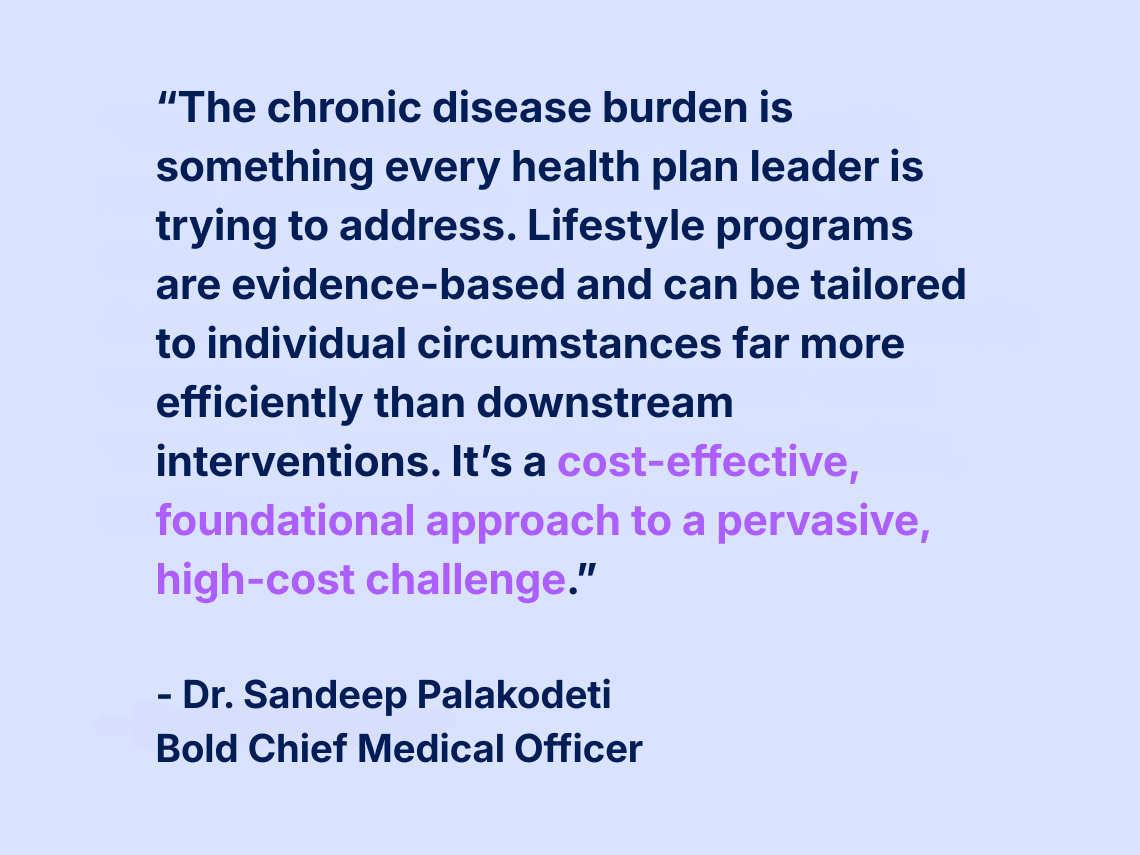
Bold partners with leading MA plans and ACOs to deliver personalized healthy aging programs that impact chronic condition management, boost Star Ratings, and lower total cost of care. Across our plan partners, 80% of Bold members report improved strength, heart health, and mobility.
Bold’s platform integrates virtual access to providers, evidence-based, guided movement, lifestyle-focused education, behavior change tools, and community resources for Medicare Advantage members managing chronic conditions. Our AI personalization engine adapts each member’s program based on their conditions, mobility level, pain, and goals, with program intensity adjusting automatically as members progress or as their symptoms change.
The bottom line for MA leaders
Through policy shifts, changes to the Stars regime, and key initiatives, CMS has made clear that lifestyle interventions are no longer optional for plans serious about managing the chronic disease burden.
To tackle the costliest chronic conditions for seniors, more MA plans need to integrate personalized healthy aging and lifestyle programs that engage members in day-to-day behavior change, give them safe and structured ways to remain active, and surround them with the resources and community that make change and healthy habits stick.
The plans that pull ahead on cost and quality will be the ones building lifestyle programs into their chronic condition strategy and partnering with companies like Bold designed for seniors and proven to deliver at scale.
More from Bold

Why modern fall prevention is foundational for Medicare Advantage
Learn why modern fall prevention is essential for Medicare Advantage performance and how Bold delivers results.

Reimagining MSK care and pain management for seniors
To tackle costs while driving clinical outcomes, leading Medicare Advantage plans need to move upstream and invest in personalized digital health programs for MSK that prioritize prevention, mobility, and functional health.

Webinar: Intro to Bold Care's Weight Loss Program
Watch this webinar to learn more about Bold's weight loss program, covered by Medicare, and how you can get started.