Core exercises for seniors: Chair sit-ups and 5 more seated moves
Chair sit-ups and other seated core exercises for seniors build strength, improve posture, and support balance, all without getting down on the floor.
Key takeaways
- Core exercises for seniors don't require getting on the floor. Seated movements like chair sit-ups, side crunches, marches, pelvic tilts, and trunk rotations strengthen the abs, obliques, back, and deeper stabilizing muscles from a sturdy chair.
- A strong core supports better posture, improved balance, and less back pain. Your core stabilizes your spine and pelvis during every movement you make, from walking to reaching for something on a high shelf.
- Core exercises are part of a well-rounded plan for weight loss after 60. While core work alone isn't enough to minimize belly fat, building lean muscle helps you lose weight without losing muscle by keeping your metabolism active as you age.
- Receive a personalized weight loss plan with recommendations for workout classes (both seated and standing, as you need) from a Bold provider: agebold.com/weight-management.
What are seated core exercises?
Seated core exercises are movements that strengthen the muscles of your abdomen, back, sides, pelvis, and buttocks, all from the stability and safety of a sturdy chair. They're some of the most accessible core exercises for seniors, especially if you have difficulty getting up and down from the floor or are looking for exercises you can do just about anywhere.
Seated core exercises aren't just about developing your abdominal muscles or getting a flatter stomach. Your core acts as a key stabilizer in your body, helping you maintain balance, prevent injuries, and support good posture. For older adults, a strong core can help prevent many common health issues, including back pain and falls.
The chair sit-up is one of the most popular seated core exercises, but there are several others worth adding to your routine. Below, we'll cover how to do each one with proper form and the benefits you can expect.
How to do a chair sit-up
One of the best parts of chair sit-ups is that they require almost no equipment. Just grab a sturdy chair and get started.
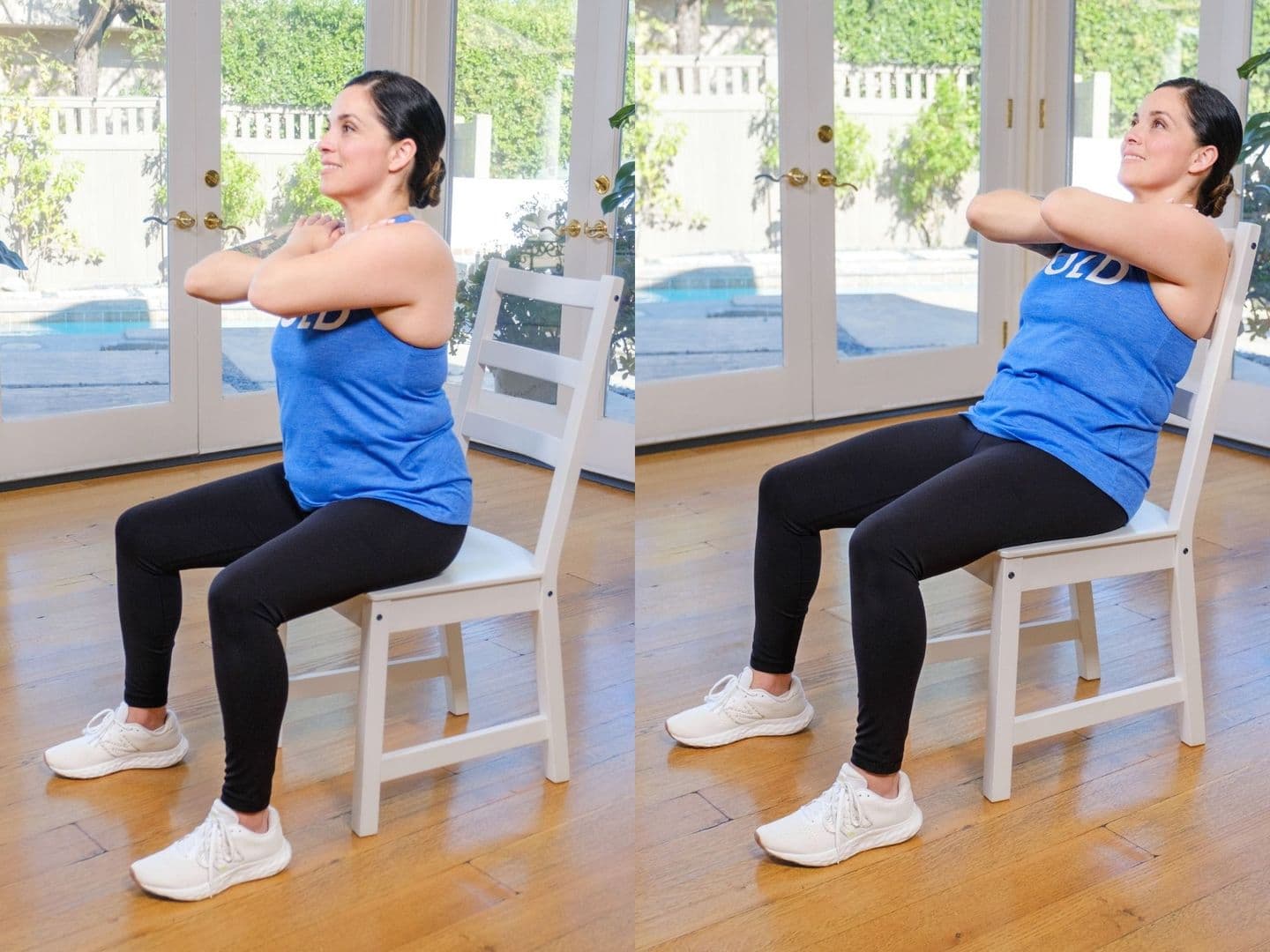
Starting position
- Start in the middle of the seat of a sturdy chair, sitting straight up and down. Use a dining chair or something similar. Avoid chairs with wheels.
- Cross your arms in front of you with your hands on your shoulders.
- Lay your feet flat on the floor with your knees hip-width apart. This will help you establish a strong base.
- Lean back towards the top rail of your chair while keeping your lower body as still as possible. Each sit-up begins from this position.
Movement
- To conduct a chair sit-up, lean forward as you engage your abdominal muscles. Try to exhale during this part of the movement. The movement is completed when you are again seated in an upright position.
- Lean back into your starting position in a controlled motion. Inhale as you lean backward.
- Repeat 8-12 times to complete one set. Aim to do at least 3 sets for optimal benefits, but it’s okay to start with as many repetitions as feel comfortable for you and work your way up.
The chair sit-up is a great foundational core exercise for seniors. But for a well-rounded seated core routine, you'll want to add a few more movements that target different parts of your core. Here are several more to try.
More seated core exercises to try
Side crunches
This is a great variation to fire up your obliques, which are the muscles on the sides of your core. They allow for rotation and stabilization of the spine.
How to
Begin from the same starting position as a chair sit-up by sitting in the middle of your chair with your feet flat on the ground. Instead of crossing your arms, put your hands behind your head and keep your elbows pointing away from your body. While keeping your hands on the back of your head, bring your elbow down toward your knee on the same side. Keep your core engaged and lift your head and elbows back to a neutral position.
Seated knee lift with reach
If you’d like to incorporate more of your upper body, this is a good way to engage both your arm and core muscles.
How to
Go to the starting position for a chair sit-up, but keep your arms by your side. Reach both arms in the air. One at a time, bring one of your elbows to the opposite side as you lift the knee. Alternate sides. While doing this, be sure to keep your core muscles engaged and breathe as you move.
Seated march
This exercise engages your lower abs and hip flexors while training your core to stabilize your torso.
How to
Start sitting tall in a sturdy chair with your feet planted on the floor and your hands resting on your thighs. Draw your belly button toward your spine and keep your shoulders back and down. Lift one knee at a time a few inches off the floor, swinging the opposite arm naturally as if you're marching. Keep your core engaged throughout and avoid leaning back. Alternate sides for several rounds.
Seated pelvic tilt
Pelvic tilts are a gentle core exercise that strengthens the deep stabilizing muscles of your lower abdomen and supports your lower back. They're especially helpful for seniors with back pain.
How to
Start sitting tall in a sturdy chair with your feet planted on the floor and your hands resting on your thighs or at your sides. Slowly tilt your pelvis forward, arching your lower back slightly. Then tilt your pelvis backward, rounding your lower back and drawing your belly button toward your spine. Move slowly and with control, breathing steadily throughout. Repeat for several rounds.
Seated trunk rotation
Rotational movements strengthen your obliques (the muscles on the sides of your core that help you twist and turn). Strong obliques support better balance and make everyday movements like reaching behind you or turning to look over your shoulder easier.
How to
Start sitting tall in a sturdy chair with your feet planted on the floor. Cross your arms over your chest or hold them in front of you at shoulder height. Keeping your hips facing forward and your core engaged, slowly rotate your upper body to one side as far as is comfortable. Hold briefly, then return to center and rotate to the other side. Alternate sides for several rounds.
Benefits of core exercises for seniors
If you want to build a stronger core, it’s important to train with exercises like chair sit-ups. Your core supports and stabilizes your center of gravity, a key component of balance and stability. Strong core muscles protect your spine and help you maintain good posture, making it easier to do everyday movements like reaching, twisting, and lifting. For example, it’s easier to swing a golf club or a pickleball paddle, grab something at the grocery store, or bend over to tie your shoe with a strong core. On the other hand, having weak core muscles can sometimes lead to poor posture and chronic lower back pain.
Core strengthening exercises are also a component of balance training that can reduce your fall risk. You’ll find chair sit-ups and many other exercises in Bold’s balance classes.
Alicia Rios, Bold’s head trainer, says, “There’s a common myth that abdominal exercises are the key to weight loss, especially around our midsection. While exercise generally helps us lose weight and keeps us healthy, abdominal exercises like chair sit-ups are just one piece of the pie. It’s important to establish a well-rounded exercise routine with a mix of different types of exercise, including aerobic activities (which increase your heart rate and breathing rate), strength training and flexibility training, and mind-body movement.”
That said, core exercises do play a meaningful role in weight loss for older adults. While they won't reduce belly fat on their own, they contribute to building and maintaining lean muscle throughout your midsection. For adults wondering how to lose weight after 60, core work is most effective when paired with lower-body strength training like chair squats, regular cardio, and a balanced diet. This combination helps you lose weight without losing muscle, so you can protect the strength, balance, and independence that matter most as you age.
Get a personalized workout routine with Bold
Bold's providers are experts in healthy aging and weight loss and can work with you to create a personalized weight loss plan that includes nutritional support and customized workout plans with both seated and standing options. Find out more at agebold.com/weight-management.
Core exercises contribute to weight loss after 60 as part of a well-rounded routine, but they won't spot-reduce belly fat on their own. They help you build and maintain lean muscle in your midsection, which supports your resting metabolism. For the best results, pair seated core work with lower-body strength training, regular cardio, and a balanced diet. This combination helps you lose weight without losing muscle — the approach that matters most for staying strong and independent as you age.
A stability ball can add challenge to core exercises by requiring your muscles to work harder to keep you balanced. But it also increases fall risk for older adults, especially those with balance concerns. A sturdy chair provides similar seated core training with much more stability and safety. If you do want to try a stability ball, make sure someone is nearby and that the ball is properly sized — your knees should be at a 90-degree angle when seated.
All of the exercises in this guide — chair sit-ups, side crunches, seated marches, pelvic tilts, trunk rotations, and seated knee lifts — can be done at home with nothing more than a sturdy chair. No gym or equipment required. Bold's online core classes are designed for older adults to follow along at home, with seated, standing, and floor options depending on your fitness level.
Yes, many core exercises can be adapted for bed if getting to a chair or the floor is difficult. Pelvic tilts, leg raises, and gentle marching movements can all be performed lying on your back in bed. The softer surface provides less stability than a chair, which means your core may actually have to work harder to keep you balanced. Start slowly, and use bed-based exercises as a stepping stone toward seated or standing options as you build strength.
Chair sit-ups, side crunches, seated marches, seated knee lifts with reach, pelvic tilts, and trunk rotations can all be done from a sturdy chair. These movements target your abs, obliques, lower abs, and deep stabilizing muscles without requiring you to get on the floor. They're ideal for seniors with balance concerns, mobility limitations, or joint pain, and they're effective enough to build real core strength over time.
Yes, every seated core exercise in this guide is appropriate for adults over 70 — chair sit-ups, side crunches, seated marches, pelvic tilts, and trunk rotations all require no floor work and can be modified to match your comfort level. Start with a few repetitions, focus on form rather than speed, and build up gradually. The key is consistency over intensity: even a few minutes of seated core work several times a week makes a meaningful difference in balance and stability.
Seated pelvic tilts and seated trunk rotations are gentle starting points that strengthen the deep stabilizing muscles around your spine without putting pressure on your back. Chair sit-ups can also help when done slowly and with control. Avoid exercises that require extreme spinal flexion, like traditional floor sit-ups, which can strain the lower back. If you have chronic back pain, talk to your healthcare provider before starting a core routine.
Weight loss for seniors
Book an appointment with a Bold Care provider to lose weight, reduce pain, and get your energy back. Your plan includes nutritional support, exercise programming, and $50 monthly copay FDA-approved GLP-1s, if prescribed.
More from Bold
Chair workouts for seniors: Your top 5 questions, answered
Discover the benefits of chair workouts for seniors: build muscle, improve balance, and stay safe while seated. Get started with simple exercises at home.
Chair Pilates for seniors: Exercises to try, benefits, and how to stay consistent
Chair Pilates for seniors is a safe, low-impact exercise that can strengthen your core and improve your flexibility. Try these seated exercises for seniors.
Chair yoga for seniors: How to get started at home
Chair yoga for seniors is a safe and gentle way to improve your balance, posture, flexibility, and strength. Start with these beginner seated yoga poses.