Chair Pilates for seniors: Exercises to try, benefits, and how to stay consistent
Chair Pilates for seniors is a safe, low-impact exercise that can strengthen your core and improve your flexibility. Try these seated exercises for seniors.

Reviewed by
Key takeaways
- Chair Pilates for seniors is a low-impact, seated form of Pilates. It strengthens the core, improves posture, and increases flexibility without low stress on the joints.
- Chair Pilates for seniors is accessible for all fitness levels and can be done entirely from home. A sturdy chair is the only equipment required.
- Consistency is key for Pilates results. Practicing 2 to 3 times per week allows you to build core strength and maintain the benefits over time.
Pilates can help you build core strength, improve hip mobility, and boost your balance, but performing it on the floor isn’t available, accessible, or comfortable for everyone.
That’s where chair Pilates comes in. Here, learn more about chair Pilates for seniors and how to get started with a workout at home.
Introduction to chair Pilates
Pilates is a low-impact form of exercise developed by Joseph Pilates more than 100 years ago. It involves around 50 different repetitive movements that can be modified for people of all fitness levels and abilities. The goal is to improve muscle strength and endurance, flexibility, posture, and balance.
Pilates is typically performed lying on a mat or on a special piece of equipment called a reformer, which is constructed with a sliding platform and a pulley system to create resistance.
But you don’t have to use a mat or a reformer. You can perform many Pilates exercises or modified versions of them while sitting in a chair for a safe workout for older adults who can’t or don’t want to exercise from the floor. Typically, the movements include arm exercises, leg exercises, posture exercises, core exercises, and all types of stretches that you can do while comfortably seated.
Benefits of chair Pilates for seniors
Chair Pilates is accessible to many people because it doesn’t require any equipment or lying down on the floor.
Because the chair supports your weight, the exercises are low-impact, meaning they involve gentler landings that put less stress and force on your joints.. Many people with joint pain can comfortably do these seated exercises, and you can always modify the movements further if a certain position is uncomfortable for you.
Whether or not you do Pilates in a chair or on the floor, you can expect to notice changes in your core strength. While more and larger studies are needed on the benefits of Pilates, early research has found the practice leads to greater core muscle activation, changes in core muscle thickness, and faster core muscle contraction, among other benefits.
Getting started with chair Pilates
Even though chair Pilates is generally considered safe for beginners and seniors, it’s always a good idea to talk to a healthcare provider before starting any new fitness routine. Once you’re cleared to exercise on your own, all you’ll need is a chair and a comfortable space to get started.
Choosing the right chair
Pick a comfortable, sturdy chair that won’t move as you exercise. It shouldn’t wobble and it shouldn’t have wheels. You should be able to comfortably plant your feet on the floor for balance while sitting toward the front edge of your chair. Ideally, use a chair without armrests. This way, you’ll have plenty of room to move comfortably in all directions.
You can even try positioning the chair against a wall for extra stability.
Creating a comfortable workout space
While you’ll perform the exercises from your chair, you still want to have some room to move around you. Set up your chair in an area where you have space to stretch your arms and legs out in front of you and to the sides without hitting anything. Otherwise, your workout space can be just about anywhere, as long as you feel comfortable exercising there.
Think about what might make it best for your unique scenario. For example: Do you have enough light in your workout space so you can see what you’re doing? Is your chair positioned close enough to your desk so you can follow along with an online workout?
Try a chair workout today
Bold offers a full library of senior-friendly chair exercise classes, designed to build strength, improve balance, and support overall health.
Chair Pilates workout for seniors
Ready to give it a try? You can follow along with Bold’s chair Pilates classes anytime from the comfort of your own home. Here’s a taste of what you can expect.
Warm-up seated exercises
“Warming up before you exercise is essential,” says Bold head trainer Alicia Rios. “It prepares your body for improved performance by gradually increasing your heart rate, breathing rate, and blood flow, which delivers more oxygen to your muscles. This preparation also reduces the risk of injury by creating muscle elasticity and lubricating your joints.”
Start with a few minutes of low-intensity movements that prepare your muscles for the work ahead. This might include:
- Neck circles
- Toe curls
- Arm circles
- Ankle alphabets
Beginner-friendly chair Pilates exercises
Chair Pilates for seniors and beginners will include plenty of different gentle, seated motions. Here are some of the classic movements you’ll find in Bold chair Pilates classes.
Spinal flexion
- Start sitting tall on the front edge of your chair with your feet firmly planted on the floor.
- Round your back by curling your tailbone under and moving your ribs back. Lower your chin toward your chest.
- Return to sitting tall.
- Repeat three to five times.
Pilates hundred
- Start sitting tall on the front edge of your chair with your feet firmly planted on the floor.
- Extend your arms out to your sides, palms facing in. Think about pulling your stomach and ribs inward and your shoulder blades back and down.
- Quickly pulse your arms in and out by your sides.
- Breathe in for five pulses and breathe out for five pulses.
- Continue until you reach 100 pulses.
Roll-up
- Start sitting tall on the front edge of your chair with your legs together in front of you. Hold the sides of your chair.
- Bring your chin toward your chest and round your spine as you fold over your legs as far as you can.
- Squeeze through your stomach to return to sitting up straight.
- Repeat three to five times.
Swan
- Start sitting tall on the front edge of your chair with your feet firmly planted on the floor.
- Place your hands on your knees and press into your palms to keep your spine tall.
- Inhale and lift your chest and chin toward the ceiling.
- Exhale and return to sitting tall.
- Repeat three to five times.
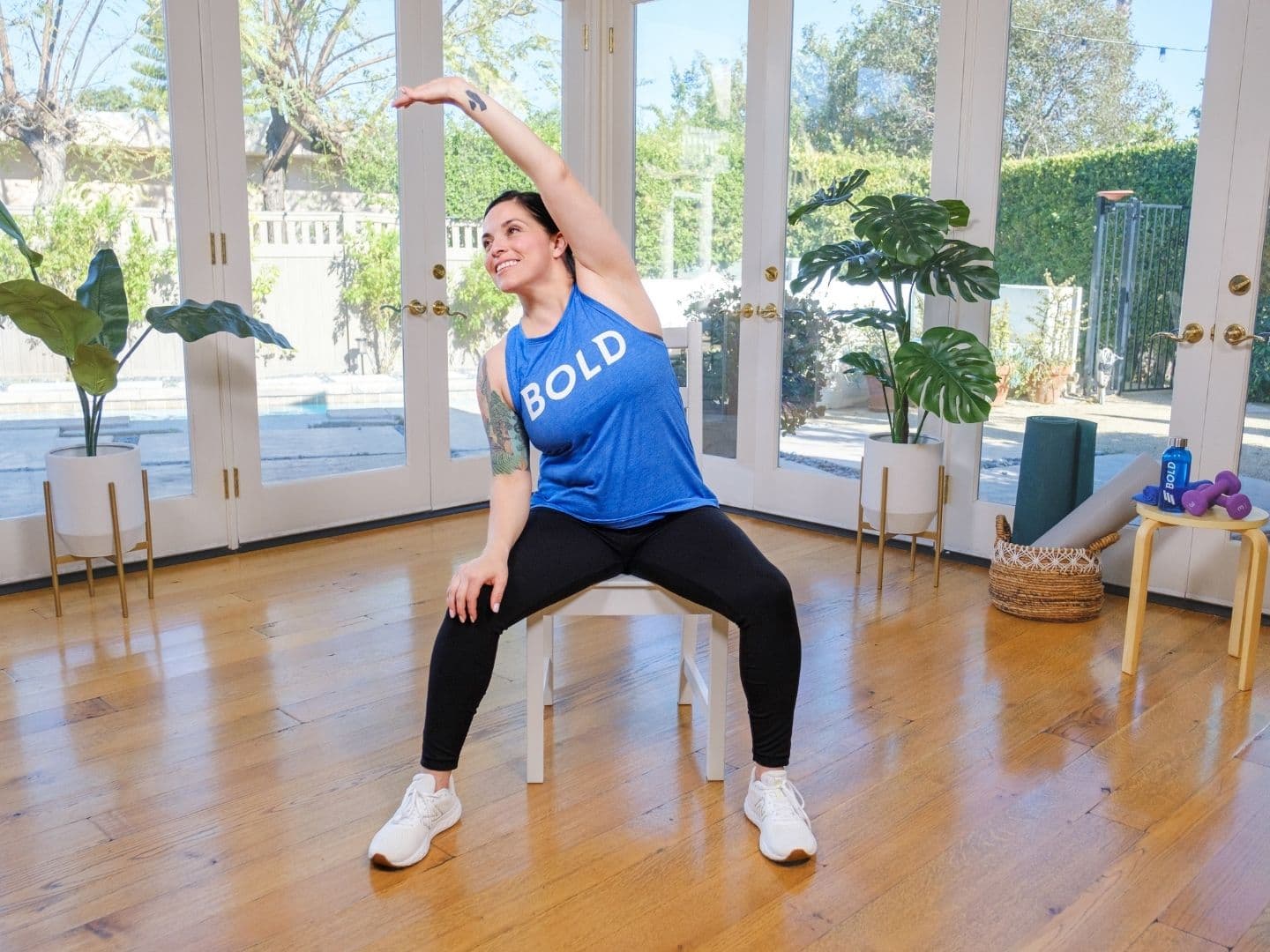
Mermaid
- Sit on the right edge of your chair with enough room to bend your right knee so your right foot is behind the chair. Hold onto the left edge of the chair with your left hand and extend your right arm overhead.
- Lean your torso to your left side, reaching your right arm over head.
- Bend your right arm, taking your fingers toward your left ear.
- Straighten your right arm, stack your torso, and return to the starting position.
- Repeat three times, then repeat on the other side.
Advanced chair Pilates options
You can progress to harder chair Pilates exercises for seniors in a number of ways.
First, you can change your intensity. This might mean performing more reps of each exercise, stringing together more exercises for a longer total chair workout, or choosing more difficult exercises. Some more advanced chair Pilates exercises include:
Single-leg stretch
- Start sitting tall on the front edge of your chair with your feet firmly planted on the floor.
- Start to round your back as you lean back against the back of the chair.
- Extend your legs forward while holding the sides of the chair.
- Lift one straight leg until it’s at knee height or parallel to the floor, then bring that knee into your chest.
- Return your leg to the floor. Repeat on the other side.
Can-can
- Start sitting tall on the front edge of your chair with your feet firmly planted on the floor, feet together and knees together. Hold the sides of the chair for support.
- Keeping your knees and feet together, lift your heels off the floor, keeping only the balls of your feet on the floor.
- Engage your core and swing your legs to the left, then the right, then back to the left.
- Kick your outside leg forward, then bring it back down.
- Continue for a few repetitions.
Leg lift
- Start sitting tall on the front edge of your chair with your feet firmly planted on the floor. Hold onto the sides of the chair by your hips and extend your legs in front of you with your feet on the floor.
- Lift your hips off the chair until your body forms a straight line from your hips to your heels.
- Hold for a few seconds.
- Gently lower back down to the chair. Optional: When you’re ready for a challenge, try holding your hips up and lifting one leg at a time.
You can also try various modifications that make beginner-friendly movements a little more advanced. For example, in the roll-up above, you can cross your arms over your chest or extend your arms straight up over your head instead of holding onto the chair. This makes the movement more challenging because you’ll need more core strength and balance to lift your torso back up.
Adding chair Pilates to your routine
Chair Pilates may not be your only form of exercise. If you want to fit it into your existing routine, aim for one or two Pilates classes per week. This is also a good starting point if you’re brand new to exercise. You can add more sessions as you start becoming more comfortable with the movements, working up to three to five classes per week, if you want.
While some people may choose to only do chair Pilates, it’s good to also include some cardio workouts and some other forms of strength training in your weekly exercise routine if you’re able. Bold’s exercise platform has lots of options — including seated cardio and seated strength training — to follow along with.
Tips for consistency
Staying consistent with any type of movement, including chair Pilates, isn’t always easy. You might get sick, get busy, or get tired of Pilates without some careful tweaks to your routine. Here are some tips for sticking with it:
- Try different chair Pilates exercises to see which ones you enjoy the most and stick to those movements.
- Modify movements as needed so you’re comfortable performing them (and therefore more likely to do them).
- If you don’t have a lot of time, try shorter workouts. Bold has chair Pilates workouts that are just a few minutes long!
- Set small, realistic goals. “Start with five minutes of chair Pilates a few times before progressing or increasing time,” Rios says. “We are not going for perfection.”
- Find an accountability buddy. Make a deal with a friend or family member that you’re going to stay consistent with your chair Pilates workouts and report back to them each week about your progress.
- Figure out your “why.” Reminding yourself why you’re doing this movement is a powerful motivator, Rios says.
- If you use a calendar, schedule your chair Pilates workouts and then hold yourself accountable to that block of time as if you were attending a doctor’s appointment.
- Have a plan B. “If you can't do chair Pilates because you get sick or your plans shift, maybe you can take a 10-minute walk outside instead to help you stay on track,” Rios says.
How to set realistic goals
Like with any exercise program, it’s important to be realistic about a new chair Pilates workout routine. Many exercisers find more success by starting small: Celebrate even just 5 minutes of chair Pilates at first, and watch your momentum build. You can also start with just a couple of the movements above and slowly add more to your routine.
Use the S.M.A.R.T. goal format for creating a workout plan you’ll actually stick with. The acronym stands for:
- Specific
- Measurable
- Actionable
- Realistic
- Time-bound
Instead of making a vague goal like “I’m going to do more chair Pilates” or an unrealistic goal like “I’m going to do a chair Pilates workout twice a day, every day, for the rest of my life”, a S.M.A.R.T. goal might look like, “I’m going to do two to three chair Pilates workouts a week for the next three months.”
Bold’s exercise platform can help you stay on track. Save chair Pilates classes to build out your program and meet your goals. Get moving in your first class today!
Try a chair workout today
Bold offers a full library of senior-friendly chair exercise classes, designed to build strength, improve balance, and support overall health.
More from Bold
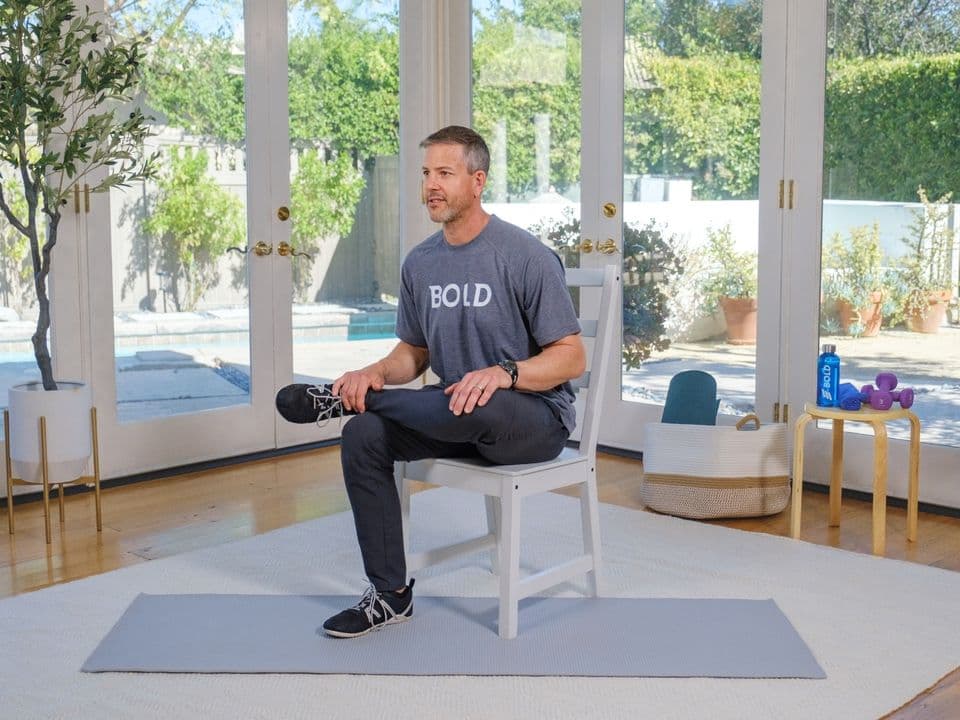
Chair yoga for seniors: How to get started at home
Chair yoga for seniors is a safe and gentle way to improve your balance, posture, flexibility, and strength. Start with these beginner seated yoga poses.
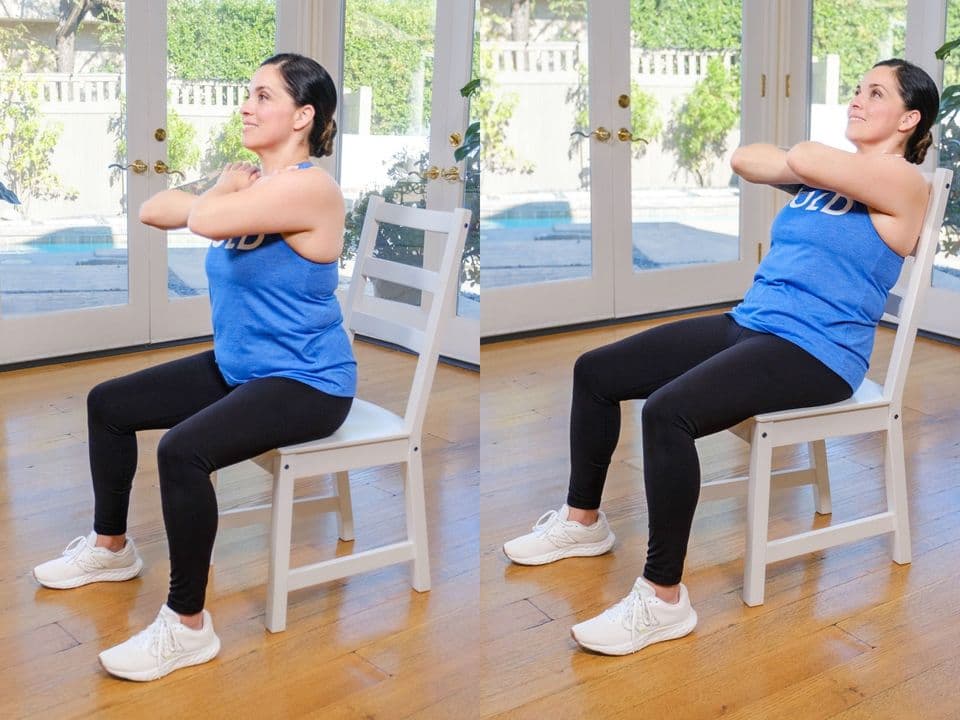
Core exercises for seniors: Chair sit-ups and 5 more seated moves
Chair sit-ups and other seated core exercises for seniors build strength, improve posture, and support balance, all without getting down on the floor.
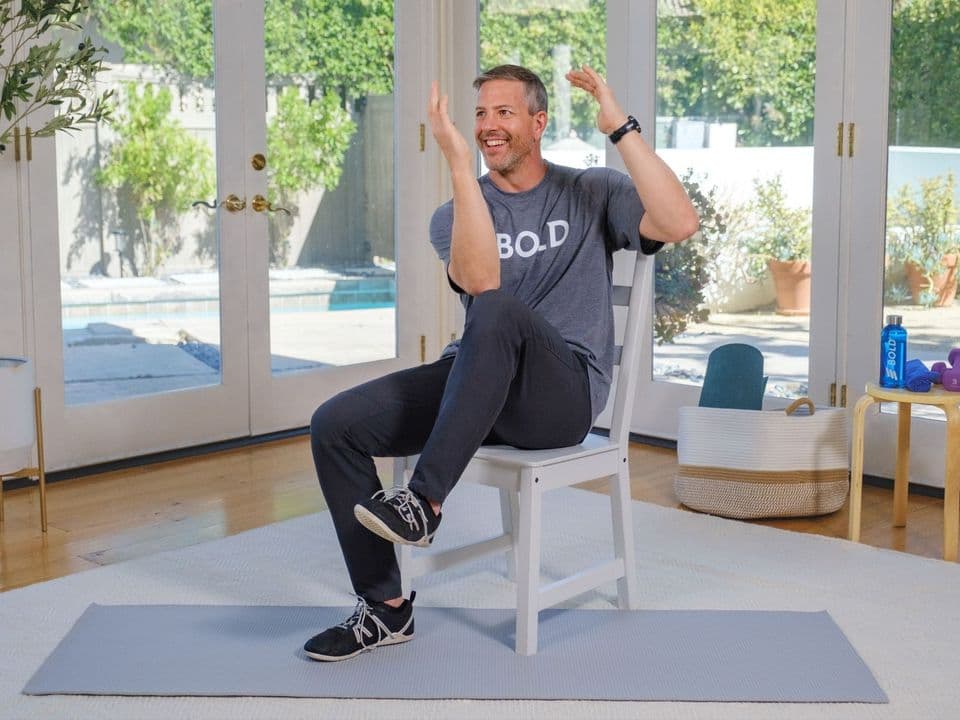
How-to videos: 5 chair exercises for seniors
Discover 5 senior-friendly chair exercises to build strength, boost flexibility, and support healthy aging.