Tai Chi for seniors: Benefits for older adults and how to get started
Tai Chi is a gentle form of movement that can help seniors improve balance, mobility, and mood. Learn more about Tai Chi exercises, including chair exercises.

Reviewed by
Key takeaways
- Tai Chi involves slow, flowing movements and deep breathing. It was originally developed as a martial art and helps to improve balance, posture, coordination, flexibility, mental health, and muscle strength.
- The CDC recommends balance exercises for adults over 65, and which includes Tai Chi.
- Tai Chi can be done at home with no equipment, can be practiced seated, and is accessible to all fitness levels. Try an online Tai Chi class today.
After 60, you might not expect to get into martial arts. But the ancient Chinese practice of Tai Chi — a form of gentle, flowing movements — originated as a martial art and has many benefits for older adults.
The practice is focused on balance, pain reduction, and the mind-body connection. Keep reading to learn more about Tai Chi for seniors.
What is Tai Chi?
Tai Chi involves flowing through a series of gentle movements while breathing deeply. These coordinated postures are said to balance your body’s energy, called your qi (pronounced “chi”), allowing you to function at your best, according to traditional Chinese medicine.
Today, older adults practice Tai Chi to improve balance, posture, coordination, flexibility, and even muscle strength. The slow, intentional movements may not appear to be very taxing at first. But standing and holding various postures will challenge your muscle strength and endurance.
Benefits of Tai Chi for seniors
Anyone can try Tai Chi, but it’s especially helpful as we age. “Tai Chi is so beneficial for older adults,” says Bold head trainer Alicia Rios. “It really supports independence and overall quality of life.”
Many people like that it’s an affordable choice. It doesn’t require any special equipment, and you can do it on your own at home. You can follow along with Bold’s Tai Chi classes.
It’s also accessible to people of varying abilities and fitness levels. You can even do Tai Chi chair exercises.
Here are some unique perks of Tai Chi exercises for seniors.
Physical health benefits
Many physical therapists recommend Tai Chi for the following physical health benefits.
Balance and fall prevention
In a 2023 review of 24 different studies on the benefits of Tai Chi, researchers found that adults over 60 who did Tai Chi regularly had fewer falls compared to people who didn’t do Tai Chi. Tai Chi helped whether these people were healthy or had underlying medical concerns. The effects were also stronger when people did Tai Chi for longer and more frequently.
Other research suggests Tai Chi is particularly helpful in reducing falls in people with Parkinson’s disease, which often causes gait (walking pattern) changes.
Pain relief
While more research is needed, studies generally support the idea of using Tai Chi exercises to ease musculoskeletal pain, especially in the cases of knee osteoarthritis and lower back pain.
Tai Chi may also help ease pain in people with fibromyalgia, as well as improve sleep quality and reduce fatigue.
Flexibility and mobility
A 2021 review of studies found practicing Tai Chi improved spinal flexibility. And in a smaller study of older women, Tai Chi improved lower-body flexibility and ability to move lower-body joints through their full range of motion.
Mental health benefits
The benefits of Tai Chi for seniors aren’t just physical. Because of the mind-body connection in this practice, there are also mental health benefits to consider.
Mood
In a 2023 review of 23 studies, researchers found a regular Tai Chi practice was associated with improvements in anxiety, depression, and general mental health compared to forms of physical activity that aren’t as mindful in nature (such as walking or cycling).
Stress management
The calming practice may also help reduce stress. In a study of 50 healthy adults, 12 weeks of Tai Chi lowered stress as well as other forms of exercise. That’s good news for people looking for a gentler form of movement to help them relax.
Try Tai Chi with Bold
Bold offers Tai Chi classes designed for older adults to improve balance, reduce stress, and support better sleep, all from home.
Popular Tai Chi movements
There are different styles of Tai Chi. The movements can vary between styles and between instructors or classes. The most popular is the Tai Chi simplified 24 form. Here are some of the common movements you’ll find in Tai Chi classes on Bold’s exercise platform.
Introductory Tai Chi movements
1. Opening
- Start standing with your feet hip-width apart with your weight balanced in both legs and your arms at your sides.You can also do this movement sitting in a chair if that’s more comfortable for you.
- On an inhale, gently float your arms up to shoulder height, palms down.
- On an exhale, let your arms gently sink back down toward your hips.
- Repeat for several breaths.
2. Separate water
- Start standing with your feet wider than shoulder-width apart with your weight balanced in both legs and your arms at your sides. You can also do this movement sitting in a chair if that’s more comfortable for you.
- With your palms up, lift your arms, elbows bent, to chest height.
- Rotate your palms to push your hands away from your chest until your arms are straight but not locked out.
- Turn your fingers slightly toward each other.
- Move your arms out to the sides slowly and gently as if you were separating water.
- Exhale as you bring your palms back in front of your chest. Inhale as you separate them again.
- Repeat for several breaths.
3. Waist rotation
- Start standing with your feet hip-width apart with your weight balanced in both legs and your arms at your sides.
- Slowly and gently rotate from your waist 45 degrees to one side, then back to center, then to the other side, breathing steadily throughout.
- Repeat for several breaths.
Advanced Tai Chi movements
1. Brush knee and push
- Start standing with your feet hip-width apart with your weight balanced in both legs and your arms at your sides.
- Put all of your weight in your left foot and turn your right foot to the right.
- Put all of your weight in your right foot and step your left foot next to your right foot.
- Step your left foot about a foot away from your right foot at a 45-degree angle.
- Turn back to your right side as you lift your arms as if you’re holding a ball in front of you with your left hand on top, palm facing down, right hand on bottom, palm facing up.
- Turn to your left side as you extend your left arm in a circle (it should brush by your knee) and circle your right arm up and push it forward.
- Turn to your right side as you complete the circle with your left arm and return your right hand to the bottom of the “ball”.
- Continue for several rotations, moving with ease and breathing steadily.
2. Cloud hands
- Start standing with your feet wider than shoulder-width apart with your weight balanced in both legs and your arms at your sides.
- Cross one wrist in front of the other several inches in front of your chest.
- Keep one hand in front of your face, palm facing you. Slowly lower the other hand to your belly, palm facing up.
- Rotate your waist 45 degrees toward the side of your upper hand.
- Gently float your hands to the opposite positions.
- Rotate your waist through the center and 45 degrees to the opposite side.
- Repeat for several rotations, keeping your body relaxed throughout. As you get more comfortable with this movement, you can also shift your weight between your feet as you rotate.
3. Gather qi from heaven and earth with a squat
- Start standing with your feet wider than shoulder-width apart with your weight balanced in both legs and your wrists crossed several inches in front of your chest.
- Separate your hands, palms down, and float your hands down in the shape of a circle in front of you as you bend your knees to squat down as far as you feel comfortable.
- When you complete the circle down by your belly, lift your palms toward your chest and press through your feet to return to standing.
- Drop your hands back down to your belly, then trace a circle upwards, bring your hands together above your head.
- Lower your hands in front of your chest.
- Repeat for several rounds.
Tai Chi walking
Tai Chi walking has gained popularity online. While you may imagine Tai Chi to involve moving your limbs while standing in one place, walking is actually a fundamental movement in the practice. It’s a little different from your regular gait. “Instead of ordinary walking, where steps are automatic and momentum-driven, Tai Chi walking emphasizes balance, weight transfer, posture, and awareness of each step,” says Bold Tai Chi instructor David Burch. “It is commonly used in Tai Chi training, rehabilitation, and fall-prevention programs, especially for older adults.” In Tai Chi walking, you’ll more purposely transfer your weight from one foot to the other, helping you improve balance and coordination.
To try it, slowly and deliberately shift your weight from one foot to the other as you step forward. Maintain your balance on one leg during each shift, and keep your body upright and tall. You should feel supported through your knees, hips and spine. This is sometimes called Cat Walk, such as in Bold’s Tai Chi classes.
You can try walking like this for a few minutes each day and see how your body (and mind) react. Bold also offers a live Tai Chi walking class each week where you can move in real-time with a trainer and other members.
How to add to Tai Chi to your routine
If you’re just starting a Tai Chi practice, it may be most comfortable to start with a few movements or a few minutes of the practice and build up to more movements and longer sessions as you grow stronger.
Tai Chi can be part of a balanced fitness routine that helps older adults move with ease. But it probably shouldn’t be the only exercise you do.
The CDC recommends that all adults who are able should get at least 150 minutes of moderate-intensity cardio exercise like brisk walking, cycling, or swimming each week. Tai Chi may not be challenging enough for all seniors to really get your heart pumping. Plus, you should also aim to get two muscle-strengthening workouts each week that may require more intensity than Tai Chi.
Tai Chi can certainly help you reach another good goal: Adults over 65 should try to do balance exercises regularly, according to the CDC. The mindful weight transfers from one foot to the other in Tai Chi are great examples.
If you’re unsure of how to fit Tai Chi into your routine, you can always discuss your current exercise habits with a trusted healthcare provider or fitness professional.
Getting started with Tai Chi at home
To get started with Tai Chi on your own, the first step is to check in with your doctor to make sure this is a safe practice for you to try.
Then, you can follow along with online classes to get a sense of some of the movements. Bold’s exercise platform offers plenty to choose from, including some you can do sitting down.
All you’ll need to get started is enough space to move in every direction and a place where you can see your screen clearly. If you’re going to try seated Tai Chi, make sure you’re using a comfortable, sturdy chair.
Take breaks as needed to release tension, catch your breath, or sip some water. “It's important to listen to your body with any exercise movement and stop if there is any pain,” Rios says. “Start any new exercise routine in a slow, gentle, and progressive manner. Endurance and strength will come as you continue to practice Tai Chi.”
Maintaining a regular Tai Chi practice
Because it’s so gentle on the body, most people can do Tai Chi every day, without rest days. But it’s always a good idea to talk to a healthcare provider, such as a Bold Care provider, about the best routine for you.
How frequently you decide to practice is up to you. But if you’re hoping to build some consistency, some tips that can help include:
- Establish a set time when you do Tai Chi. “Practice at the same time, follow the same simple routine for a week, and focus on how it makes you feel,” Burch says. This can help make your practice feel like a habit.
- Start with just a short practice. “Even a few minutes counts,” Burch says.
- “If you miss a day, don’t dwell on it,” he says. “Just start again the next day and build a new streak.
- Think about progress, not perfection. It’s common to wobble throughout the practice rather than maintain perfect balance. Give yourself time and space to experiment and see how your body feels without judging yourself.
- Consider making a special space for your practice. Setting up a quiet, calm area of your home where you do Tai Chi can encourage you to stick with it.
Curious to see what it’s like? Try Tai Chi-inspired exercise for free with Bold today.
Try Tai Chi with Bold
Bold offers Tai Chi classes designed for older adults to improve balance, reduce stress, and support better sleep, all from home.
More from Bold
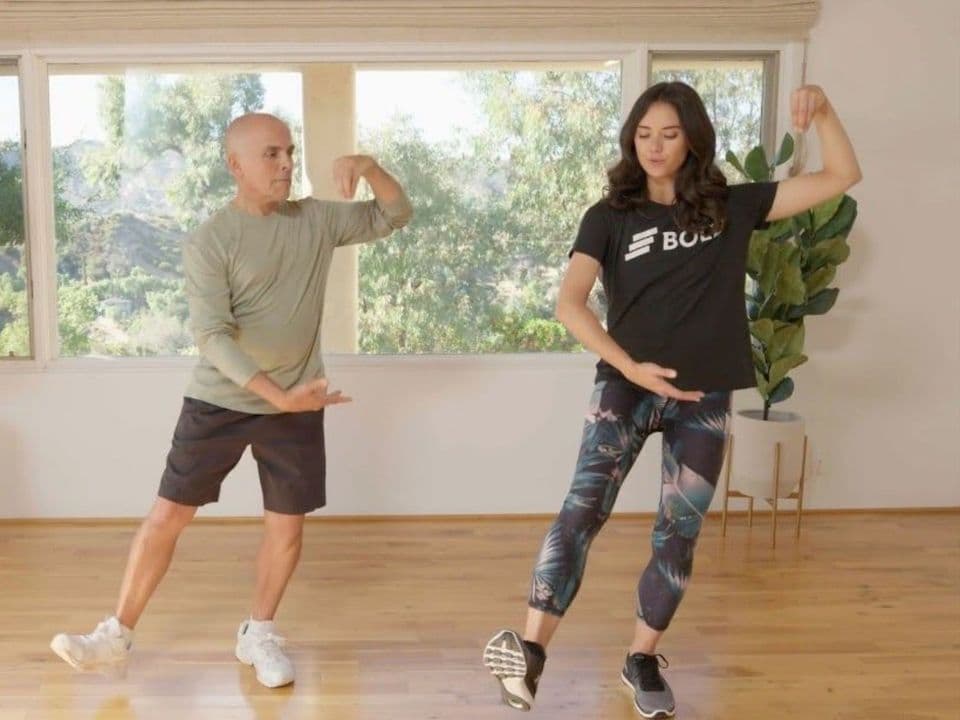
5 benefits of Tai Chi for seniors
Learn why Tai Chi for seniors supports healthy aging. Discover 5 Tai Chi benefits for seniors: improved balance, better sleep, pain relief, and more.
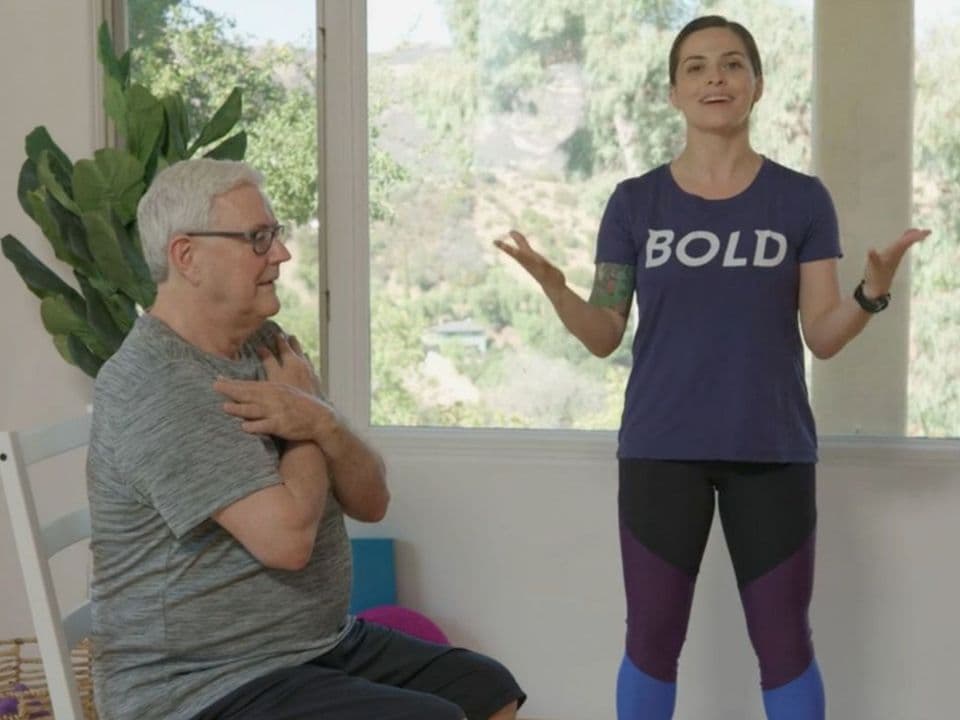
Chair workouts for seniors: Your top 5 questions, answered
Discover the benefits of chair workouts for seniors: build muscle, improve balance, and stay safe while seated. Get started with simple exercises at home.
How to practice self-care as you age
Discover five simple, expert-backed ways to reduce stress and feel better every day with Bold.