CMS ACCESS: Improving chronic MSK pain management for seniors with Bold
Bold is an approved participant in the CMS ACCESS program: Why partner with Bold, what this means for your practice, and how to refer your patients to Bold's trusted, evidence-based online MSK pain program
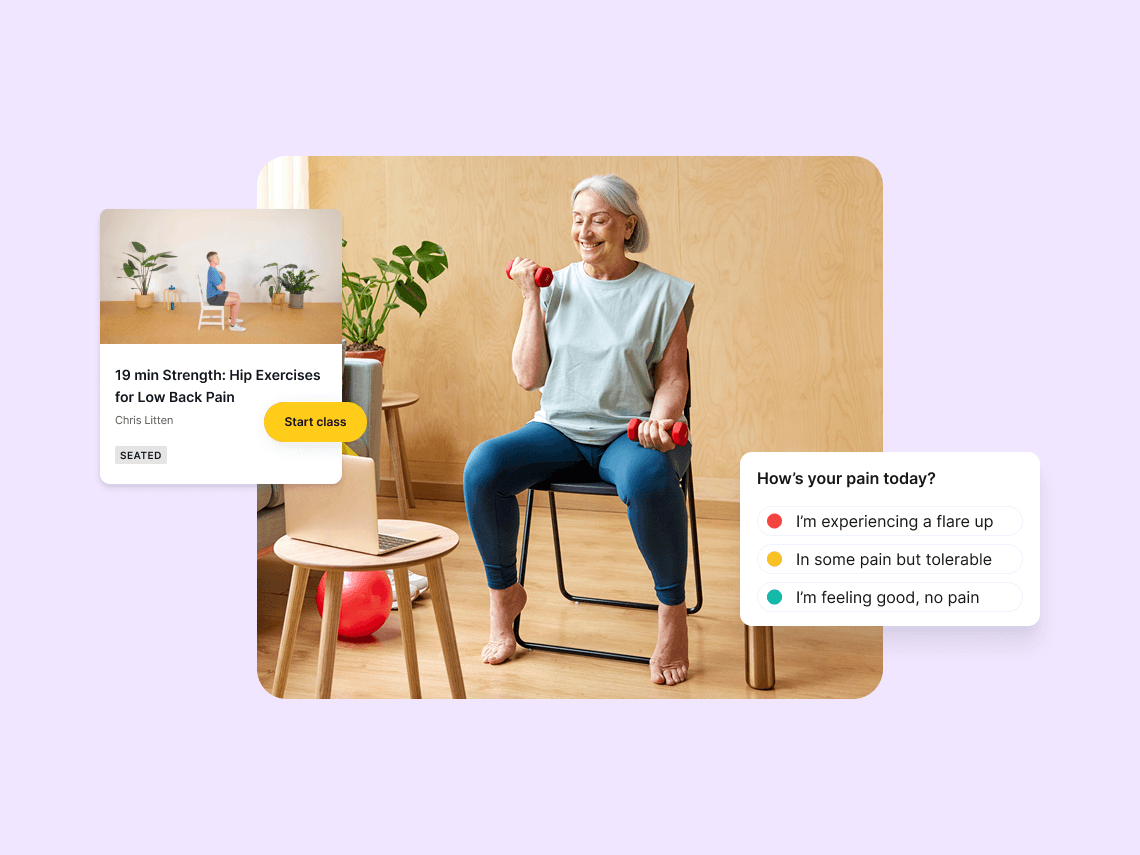
An estimated 40-60% of seniors experience persistent musculoskeletal (MSK) pain – defined as pain that lasts for longer than three months.
For the majority of Original Medicare members experiencing chronic MSK pain and other common chronic conditions, access to innovative, technology-supported programs to help them manage these conditions – and their overall health – has been limited. The new ACCESS (Advancing Chronic Care with Effective, Scalable Solutions) model from the CMS Innovation Center aims to change this. By testing a new Outcome-Aligned Payments model that rewards outcomes and engagement, ACCESS “gives clinicians greater flexibility to deliver modern technology-supported care in ways that best improve patient health,” per CMS.
Launching July 5, 2026, and running for 10 years, ACCESS opens a new pathway for clinicians and physical therapists (PTs), ACOs, health systems, and provider groups to refer patients into evidence-based, technology-first chronic pain programs like Bold – with a recurring, predictable revenue stream through CMS.
Bold is one of a select group of approved participants in the ACCESS MSK chronic pain track – and one of the only participants built exclusively for adults 65 and older. Bold is a trusted partner with proven outcomes in the Medicare population, seamless integration into existing workflows, and a long-term commitment to shared outcomes.
“ACCESS brings agency to aging, an experience that is so often patronized or dismissed. It will encourage innovation and a race for excellence amongst health tech companies that we are excited to be a part of.” - Amanda Rees, CEO and co-founder of Bold
Interested in learning how your practice can participate in ACCESS? Get in touch.
The chronic MSK pain burden in older adults
Nearly three out of four adults 65 and older are affected by MSK conditions, such as knee or back pain, swelling, or arthritis. Annual MSK spending in the U.S. is estimated at $380.9 billion, ranking it ahead of diabetes and cardiovascular disease.
For seniors, MSK pain is a compounding issue that extends beyond the site of pain to overall physical and mental health. Persistent pain drives reduced activity, which accelerates muscle loss and functional decline. Declining function raises fall risk. Falls drive hospitalizations, rehabilitation, and, in many cases, surgical intervention. The average age for knee and hip replacement is 67 and 65, respectively, meaning Medicare shoulders the brunt of these costs.
Pain also takes a well-documented toll on mental health. Evidence points to a reciprocal relationship between pain and depression in older adults: chronic MSK pain is an independent risk factor for depression, and depression independently worsens pain outcomes. Seniors managing both face steeper barriers to engagement, worse functional recovery, and higher total utilization.
The clinical case for sustained, structured MSK care in this population is clear, but the pathway to deliver it at scale has been missing.
What CMS ACCESS makes possible
Launching July 5, 2026, CMS introduced the ACCESS (Advancing Chronic Care with Effective, Scalable Solutions) Model to create a new reimbursement framework for technology-enabled chronic disease management in Original Medicare. ACCESS focuses on the most prevalent conditions among people with Medicare, including high blood pressure, diabetes, depression, and chronic musculoskeletal (MSK) pain. For PT practices and providers, it opens a pathway that didn’t previously exist: a mechanism to refer patients into technology-first, ongoing, evidence-based chronic pain programs – and to receive a co-management payment from CMS for doing so.
In the MSK chronic pain track, ACCESS enables:
- Simple, structured referral pathway from PT practices and providers to CMS-approved digital programs like Bold for patients with chronic pain lasting 12 or more weeks
- Continuity of care with clinical updates and escalation support built into existing provider workflows to give referring clinicians full visibility into patient results from their digital programs
- Predictable co-management payment from CMS to referring clinicians of up to $100 annually per enrolled beneficiary
For practices, this means a new opportunity to explore innovative, proven technology like Bold that extend clinical impact without standalone implementations, new billing infrastructure, or new program builds.
Personalized programs for seniors: Why partner with Bold
What separates Bold from other approved participants in the ACCESS MSK chronic pain track is critical: Bold was built from the ground up for the Medicare population, and has been proving clinical outcomes and cost savings for years.
Most digital MSK programs were designed for commercially insured, working-age adults. This means education and exercise programming, user experiences, and clinical content that are calibrated for a population that is younger, less likely to have comorbidities, and more familiar with digital health tools. Adapting those programs for seniors is not the same as building for seniors from day one.
Bold’s clinical MSK program is purpose-built for adults 65 and older:
- AI-enabled personalized programs that bring together exercise, lifestyle changes, education, and behavior change
- Strength, mobility, and balance offerings specifically designed for seniors, by physical therapists to address prevention, early intervention, treatment, and recovery – with seated classes and customized modifications based on in-depth pain assessments
- Adaptive to daily and monthly changes in pain levels and preferences from users that ensure the program stays relevant, accessible, and is optimized for outcomes
- Evidence-based pain neuroscience education resources that help seniors make sense of their pain and understand their treatment options for MSK pain, along with practical tips like articles on the best exercises for knee pain and videos with PTs on exercising with hip pain
- Built-in mental health support and community resources, including live group sessions and expert-led discussions on pain and aging
- Behavioral habit formation tools to sustain engagement and outcomes over the 12-month program
Across existing ACO, Medicare, and Medicare Advantage plan partners, Bold is driving outcomes for members with MSK conditions and pain, including:
- 80% members report improved strength, heart health, and mobility (1)
- 40%+ reduction in falls and fall-related hospitalizations (2)
- More than 9 in 10 members say something they learned from Bold has helped them in their day-to-day life (1)
Built around your practice to complement care: What a Bold partnership looks like for ACCESS
In order to make ACCESS work for you and your patients, we’re committed to acting as an extension of your care team. We’re focused on making partnerships with Bold through ACCESS as seamless and simple as possible for clinicians, while focusing on delivering long-term outcomes.
Here are key things to know about partnering with Bold through ACCESS:
- Minimal administrative lift for you or your team at implementation and beyond, with a commitment to ongoing program improvements to meet your needs
- Secure, ongoing clinical updates delivered at key points of care and escalation
- Integration into your existing workflows, including your EHR
- Straightforward referral process to easily identify and refer eligible patients, then handoff intake and formal eligibility checks to Bold
- Billing through CMS directly for co-management and ongoing outcomes, meaning no new billing infrastructure required to collect revenue
The longer-term opportunity
ACCESS is structured as a Medicare fee-for-service pilot, but it is designed to become something larger. The program’s commercial payer pledge has brought 14 major payers – including Humana, UnitedHealthcare, Cigna, Devoted Health, and Centene – covering 165 million lives into a commitment to align their payment approaches with outcomes by January 2028.
While there is much to prove in terms of making the ACCESS Outcome-Aligned Payments model sustainable for practices and digital health companies alike, CMS has signaled that the new standard of reimbursement for technology-enabled chronic care is being set now. Bold is building toward that future and excited to build new partnerships and deepen existing partnerships with providers and payers committed to the same.
Partner with Bold and refer your patients through ACCESS
→ Refer your patients: Eligible patients for Bold’s chronic MSK pain program through ACCESS are:
- Original Medicare beneficiaries
- Experiencing chronic MSK pain (12+ weeks) in low back, upper back, knee, hip, neck, or shoulder
- Located in California, Florida, Illinois, New York, New Jersey, Pennsylvania, Texas, Ohio, or Maryland (Note: We’ll be expanding coverage to more states in the coming weeks)
Direct your patients to agebold.com/access.
→ Explore partnership & learn more: To talk more about supporting your patients and driving outcomes together through ACCESS, reach out to Bold’s partnerships team here.
Sources: 1 - Bold Book of Business, 2025; 2 - Partner claims analysis, 2024
More from Bold
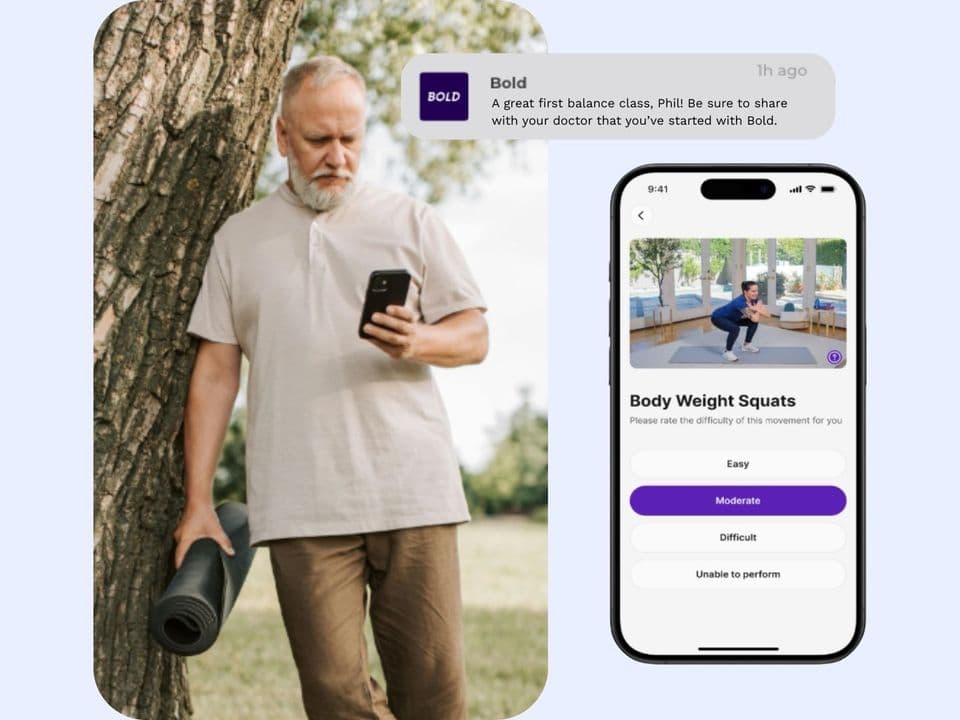
Why modern fall prevention is foundational for Medicare Advantage
Learn why modern fall prevention is essential for Medicare Advantage performance and how Bold delivers results.

Reimagining MSK care and pain management for seniors
To tackle costs while driving clinical outcomes, leading Medicare Advantage plans need to move upstream and invest in personalized digital health programs for MSK that prioritize prevention, mobility, and functional health.

Webinar: Intro to Bold Care's Weight Loss Program
Watch this webinar to learn more about Bold's weight loss program, covered by Medicare, and how you can get started.